When choosing a stone-look wall finish, the decision is rarely just about appearance. Homeowners, designers, contractors and project buyers also need to consider weight, wall preparation, installation time, maintenance, room conditions and the total installed cost.
Polyurethane faux stone siding and real stone can both create an impressive feature wall, but they solve different problems. Polyurethane stone wall panels are often easier to handle and more practical for interior renovation, while real stone may be the better fit when authentic mineral texture, mass and long-term material authenticity are the main priorities.

The right choice depends on the wall, the room and the performance requirements of the project.
तुरंत उत्तर: Choose PU stone panels when you want a lightweight stone appearance, simpler handling and a more manageable renovation process. Choose real stone when authentic stone material, maximum surface hardness and natural variation are more important than installation speed or wall load.
What Is Polyurethane Faux Stone Siding?
Polyurethane faux stone siding is a molded decorative panel designed to reproduce the appearance of stacked stone, ledgestone, slate, brick or other natural textures.
For interior applications, the same product family may also be described as:
- पीयू पत्थर की दीवार पैनल
- Polyurethane faux stone panels
- Faux stone polyurethane panels
- Artificial stone wall panels
- Lightweight stone wall cladding
- Stone-look feature wall panels
The word “siding” is commonly used in search queries for exterior-style stone surfaces. However, many PU stone products are also used indoors for villa TV walls, hotel lobbies, restaurant feature walls, reception areas and retail interiors.
Before ordering, check whether the selected model is intended for interior use, exterior use, wet areas or high-temperature locations. Do not assume that every polyurethane panel has the same performance.
PU Stone Panels vs Real Stone: A Side-by-Side Comparison
| Buying factor | पीयू पत्थर पैनल | Real stone |
|---|
| Appearance | Reproduces a selected stone texture and color | Each piece has natural mineral variation |
| Weight | Usually easier to handle, but exact weight depends on model and thickness | Heavier and more dependent on stone type and thickness |
| स्थापना | Often designed for faster decorative installation | Usually requires more preparation, handling and skilled labor |
| Wall preparation | Still requires a suitable, clean and stable substrate | May require stronger structural preparation |
| Cost structure | Panel price plus adhesive, trims, labor and finishing | Stone price plus transport, cutting, support and installation |
| Maintenance | Cleaning instructions depend on the surface finish | Natural stone may require sealing or special cleaning |
| Impact and heat | Depends on the panel structure and surface finish | Solid stone is generally more resistant to hard impact |
| Wet areas | Do not assume suitability for constant direct water | Stone itself may tolerate water, but joints and installation still matter |
| Best fit | Interior feature walls and renovation projects | Projects where natural stone is a core design or specification requirement |
This table gives a starting point, but the final decision should be based on the selected product’s data sheet, installation instructions and project conditions.

1. Appearance: Can PU Stone Panels Look Like Real Stone?
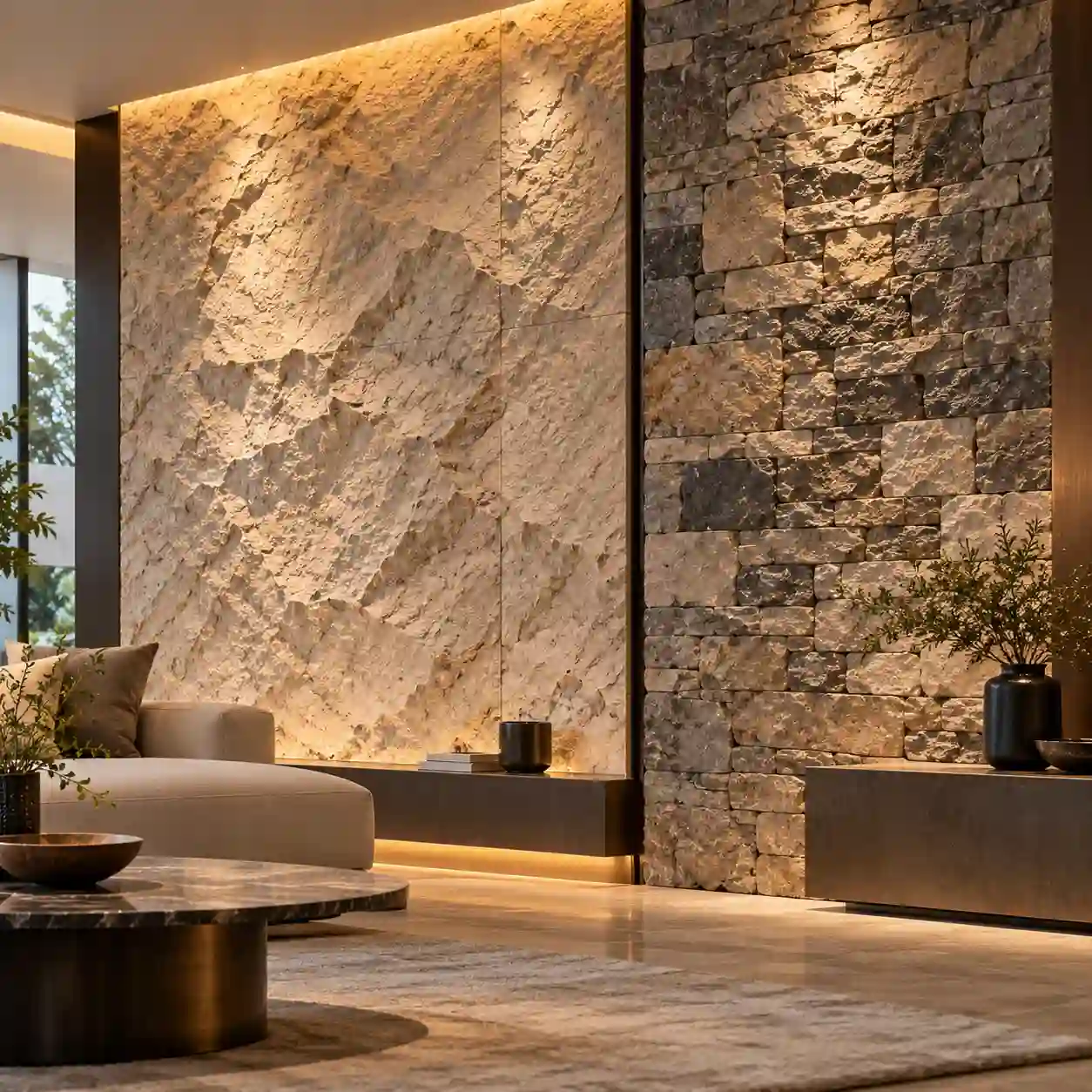
A high-quality PU panel can reproduce the broad visual effect of natural stone, including stacked stone patterns, split-face textures, slate-like surfaces, random stone layouts, aged masonry effects and warm beige, grey, brown or charcoal tones.
From normal viewing distance, the overall impression can be convincing, especially on a TV wall, reception wall or hotel corridor. However, PU panels are manufactured to repeat a selected texture, while natural stone contains irregular changes in grain, depth, color and shape.
This difference matters most when:
- The wall is very large
- The surface will be viewed from a short distance
- The design requires unique natural variation
- The project specification requires genuine stone
- The edge of each piece will remain visible
For a residential feature wall, the visual question is usually not “Is every detail identical to real stone?” It is “Does the finished wall create the atmosphere and proportion I want?”
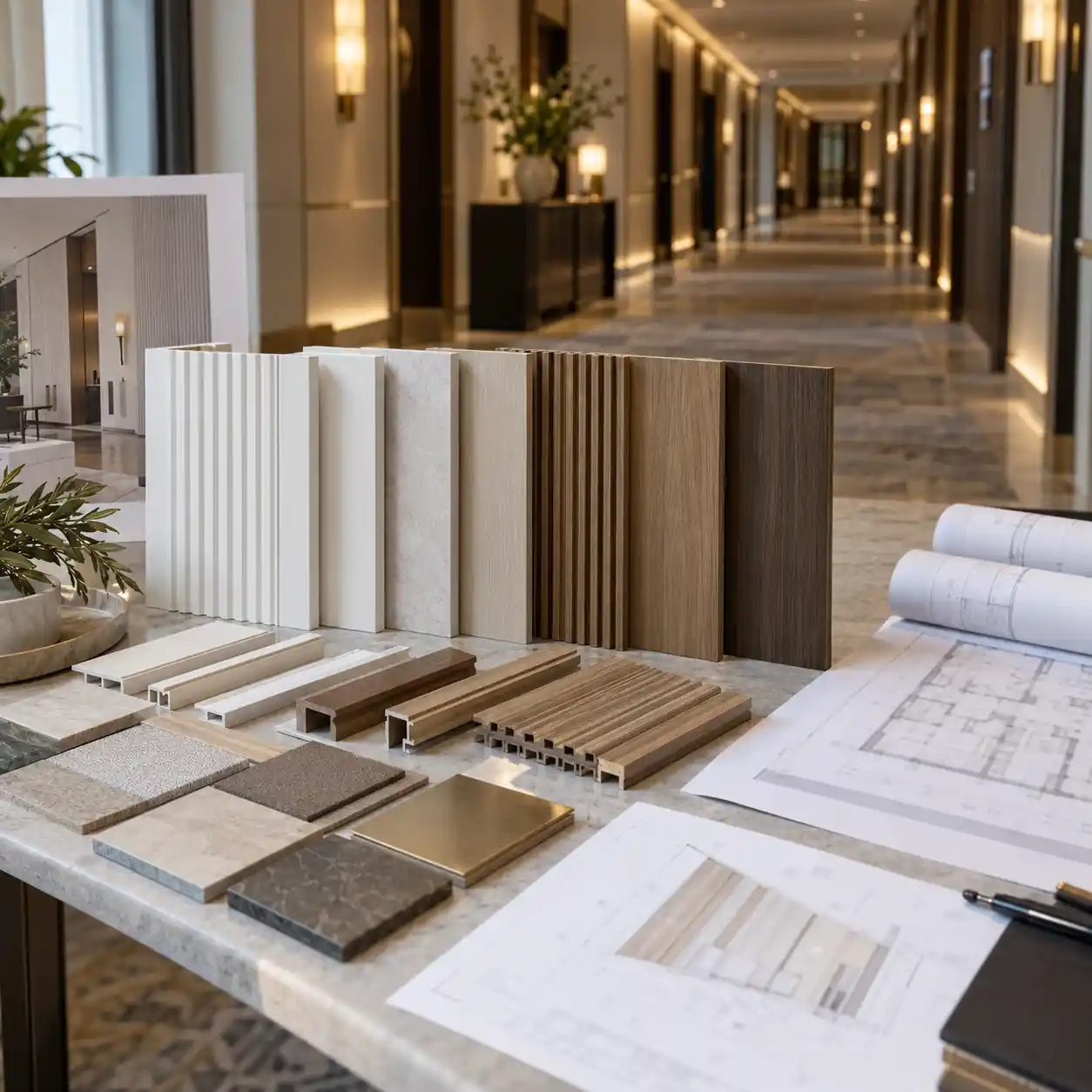
Always request a physical sample or close-up image before making a final decision. A screen image may not show the actual surface depth, color tone or sheen. You can compare different textures in the PU stone wall panel collection.
2. Weight and Wall Suitability
Weight is one of the biggest practical differences between PU stone panels and real stone.
Real stone can create a substantial load on the wall and may require stronger substrate preparation, additional support, more careful transport, more workers during installation and stronger fixing methods.
PU panels are generally easier to move and position because they are manufactured as decorative panels rather than solid stone pieces. That can make them attractive for renovation walls where access is limited or where the existing wall cannot easily be rebuilt.
However, “lightweight” does not mean “install anywhere.” The wall should still be stable, dry, clean, free from loose dust or old paint and suitable for the recommended adhesive or fixing system.
The exact product weight depends on the panel model, thickness, texture and backing structure. Ask for the product data sheet rather than relying on a general percentage.
3. Cost: Compare the Complete Installed Cost
The cheapest panel price does not always create the lowest project cost.
A more useful comparison includes five parts:
- Material cost
- Freight and handling
- Wall preparation
- Installation labor
- Trims, adhesive, sealant and finishing
Real stone may have a higher installation cost because it can require more cutting, lifting, support and skilled labor. PU panels may reduce some handling and labor pressure, but the final price still depends on the selected finish, wall size, layout and installation method.
For a fair comparison, ask both suppliers to quote the same information:
- Price per square meter or square foot
- Coverage after cutting and waste
- Panel dimensions
- मोटाई
- Weight per panel
- Recommended adhesive
- Corner and edge solutions
- Delivery method
- Installation requirements
- Whether samples are available
You can also ask for a project quote based on wall dimensions instead of comparing only the product headline price. This gives a more realistic view of the finished wall cost.
4. Installation and Renovation Disruption
For many homeowners and commercial projects, installation disruption is just as important as material cost.
A renovation may need to stay open while work is completed. This is particularly relevant for hotel corridors, restaurant interiors, retail stores, office receptions, apartment renovations, villa living rooms and showrooms.
PU wall panels may be easier to cut, position and adjust than individual stone pieces. This can help reduce handling and make small-area renovations more manageable.
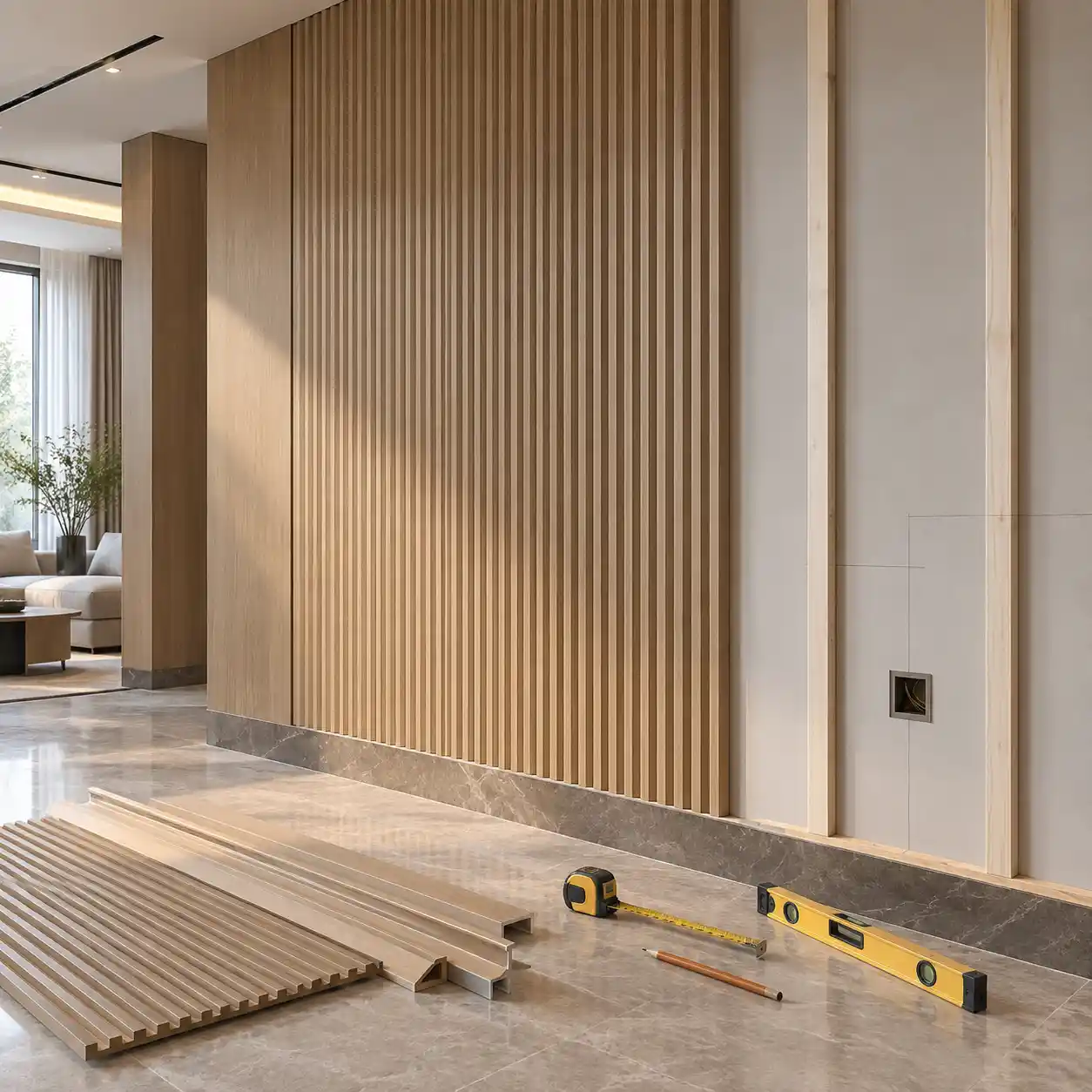
Installation quality still matters. The finished result depends on accurate wall measurements, a suitable substrate, correct panel layout, proper alignment, clean corner treatment, consistent joints, suitable adhesive and correct finishing around doors and openings.
Decorative panels should not be treated as a way to hide serious moisture, structural or substrate problems. Those issues should be solved before installation.
For professional projects, coordinate the panel layout with lighting, electrical outlets, doors, furniture and signage before fixing the first panel.
5. Maintenance and Long-Term Ownership
The maintenance difference depends on the surface finish, location and cleaning routine.
A PU decorative wall may be easier to clean when the surface has a stable finish and the wall is not exposed to heavy impact or constant moisture. Routine care commonly focuses on removing dust and wiping surface dirt according to the manufacturer’s instructions.
Real stone may require additional attention depending on stone type, porosity, surface treatment, joint material, exposure to oils or stains, cleaning chemicals and indoor or outdoor location.
Neither material should be described as completely maintenance-free.
Before ordering, ask:
- Can the surface be wiped with a damp cloth?
- Which cleaners should be avoided?
- Is sealing required?
- Can a damaged section be repaired or replaced?
- Will the color or texture change under the intended lighting?
- Are spare panels or matching trims available?
For products with deep texture, dust can collect in recessed areas. A practical cleaning method should be confirmed before installation in restaurants, hotel corridors or commercial spaces.
6. Where PU Stone Panels Usually Work Well
Villa TV Walls
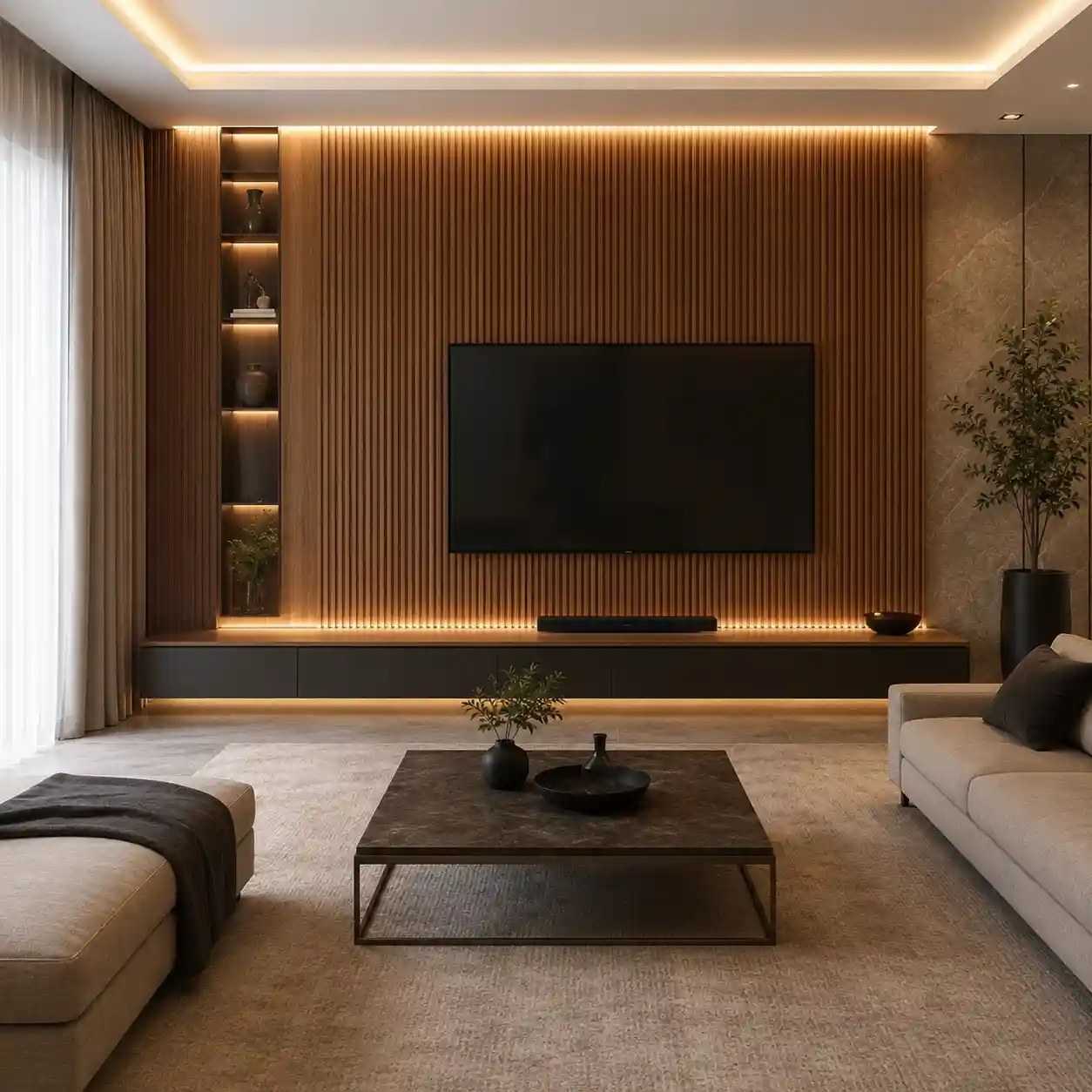
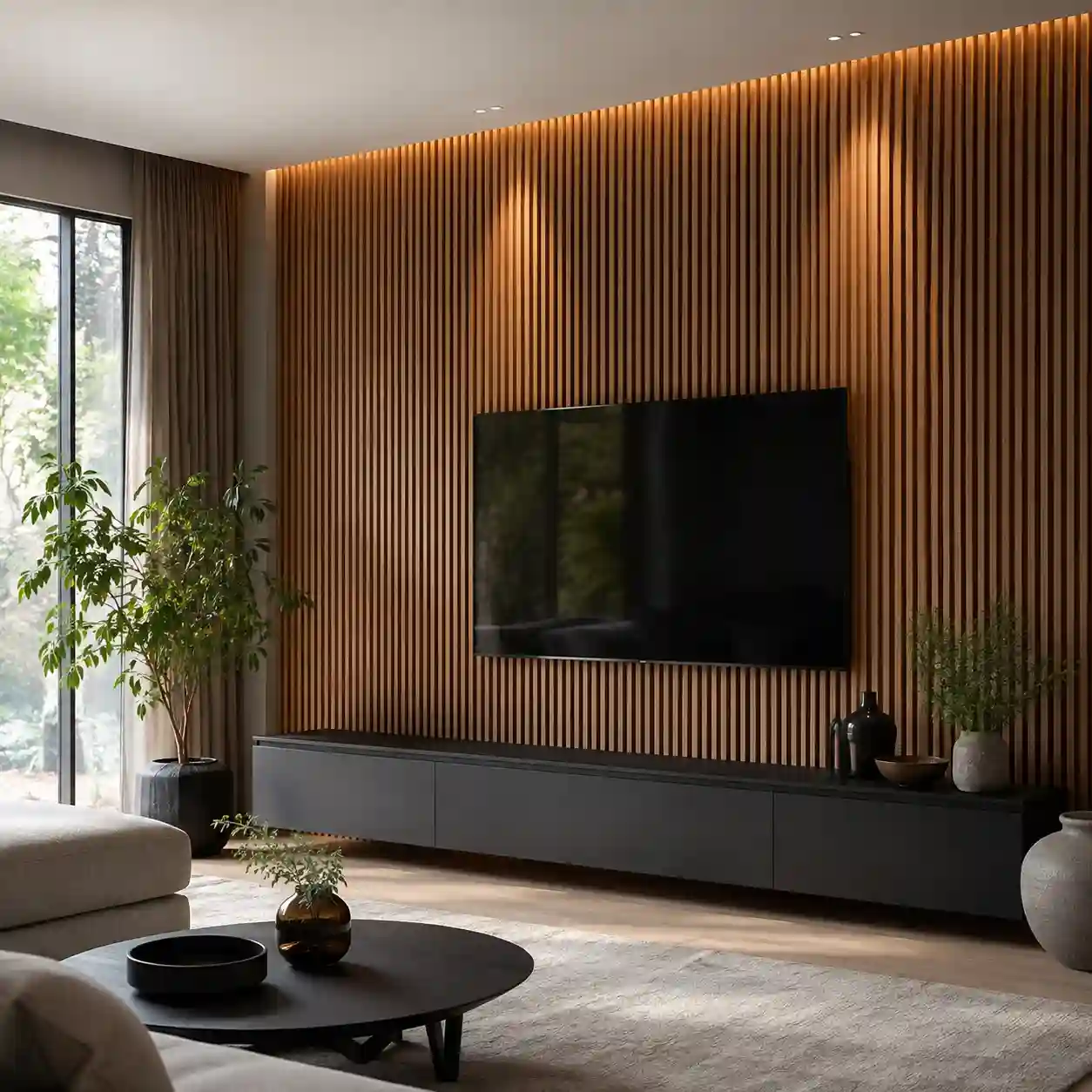
A textured stone wall can create a visual focal point behind a television, fireplace-style feature or media cabinet. The panel layout should be planned around the screen, lighting and furniture.
Living Rooms and Dining Areas
Faux stone panels can add texture to one selected wall without making the entire room feel heavy. Neutral grey, beige and warm stone tones are often easier to coordinate with furniture.
Hotel Lobbies and Reception Walls
The material can support a strong first impression in areas where the wall needs to look finished and intentional. Corner details, lighting and signage integration should be planned together.
Restaurant Feature Walls
A stone-look wall can support rustic, industrial, Mediterranean or natural design themes. In food-service areas, confirm the cleaning requirements and avoid using the panel where it will receive direct heat, grease or constant water unless the selected model is specifically approved.
Retail and Commercial Interiors
PU stone wall panels can be used for display backgrounds, brand walls and decorative areas where the visual effect matters but the project also needs manageable installation.
For more product-specific options, review the पॉलीयूरीथेन नकली पत्थर पैनल and explore the पॉलीयूरेथेन पत्थर पैनल before choosing a design.

7. When Real Stone May Still Be the Better Choice
Real stone may be the better option when the project specification requires genuine stone, natural variation is central to the design, the wall must withstand repeated hard impact, the material itself is part of the architectural concept, the project has adequate structural support, installation time is less important or the client specifically wants a natural mineral surface.
Real stone is not automatically better for every project. It may also introduce more weight, handling, cutting, transport and installation complexity.
The best decision is based on the project’s priorities rather than the idea that one material is universally superior.
Important Use Boundaries Before You Order
Direct Shower and Constant Water Exposure
Do not assume that a decorative PU stone panel is suitable for a shower enclosure or a wall exposed to constant direct water.
For wet areas, check the selected model, substrate, joints, sealing method and installation instructions. For shower-related applications, compare SPC waterproof bathroom wall panels where appropriate.
Exterior Installation
Outdoor suitability depends on the exact product, climate, UV exposure, temperature changes, fixing method and water management.
A product used indoors should not automatically be promoted for exterior siding. Ask for model-specific outdoor guidance and documentation before installation.
Fireplaces and High-Temperature Areas
Do not install polyurethane panels close to open flames, high-temperature appliances or unprotected heat sources unless the selected system is specifically approved for that use.
A decorative fire-look wall and a heat-resistant wall system are not the same thing.
Commercial Fire Requirements
If a hotel, office, public building or commercial project has fire-performance requirements, request the relevant test documentation for the exact product and installation system.
Do not rely on a general statement such as “fire-rated wall panel” unless the report, product identity and application conditions match the project.
Six Questions to Ask Before Choosing PU or Real Stone
Before ordering, ask these questions:
- Is the product intended for my room and exposure conditions?
- What is the exact panel weight and thickness?
- What wall substrate and fixing method are required?
- How are corners, edges, doors and openings finished?
- Can I receive a physical sample or finish comparison?
- Which technical documents apply to this exact model?
For a project quote, send the wall width and height, room photos, intended application, preferred texture or color, country and delivery location, and any fire, moisture or outdoor requirements. Request a PU stone sample recommendation and project quote with these details.
This allows the supplier to recommend a more suitable panel instead of quoting only from a product name.
Frequently Asked Questions
Are PU stone panels made from real stone?
No. PU stone panels are manufactured decorative panels designed to reproduce the appearance of stone. They can imitate different textures and colors, but they are not solid natural stone.
Do PU stone panels look cheap?
Not necessarily. The result depends on texture quality, color variation, panel layout, lighting and installation details. A sample should be viewed before ordering because online images may not show surface depth accurately.
Are polyurethane stone wall panels waterproof?
Do not assume that every PU panel is waterproof or suitable for constant direct water. Check the exact model and installation system. For showers and wet areas, use a product specifically intended for that environment.
Can PU stone panels be used outdoors?
Some products may be designed for particular outdoor applications, but suitability depends on the exact product and climate. Confirm UV, temperature, moisture and fixing requirements before outdoor installation.
Are PU panels easier to install than real stone?
They may be easier to handle because they are manufactured as decorative panels rather than solid stone pieces. The actual installation still requires a stable substrate, accurate layout and the correct fixing method.
Is real stone always more durable?
Real stone is generally a harder material, but durability also depends on the stone type, installation, joints, exposure and maintenance. PU panels may be more practical for decorative interior walls where heavy impact is not expected.
How should I compare the cost?
Compare the complete installed cost, including material, delivery, wall preparation, labor, adhesive, trims, cutting, waste and maintenance requirements.
What should I request before ordering?
Request a physical sample, exact dimensions, thickness, weight, installation instructions, care instructions and any product-specific test documentation required for your project.
Final Recommendation
Choose PU stone panels when your priority is a convincing stone-look wall with easier handling, a more manageable renovation process and flexible interior applications.
Choose real stone when authentic mineral material, natural variation and high surface hardness are more important than weight, installation complexity or project disruption.
The safest way to choose is to compare a physical sample, confirm the wall conditions and request product-specific documentation before ordering. You can begin by reviewing the PU stone panel range or send your wall dimensions and project photos for a suitable recommendation.



 English
 العربية
 हिन्दी
 Español
 Français