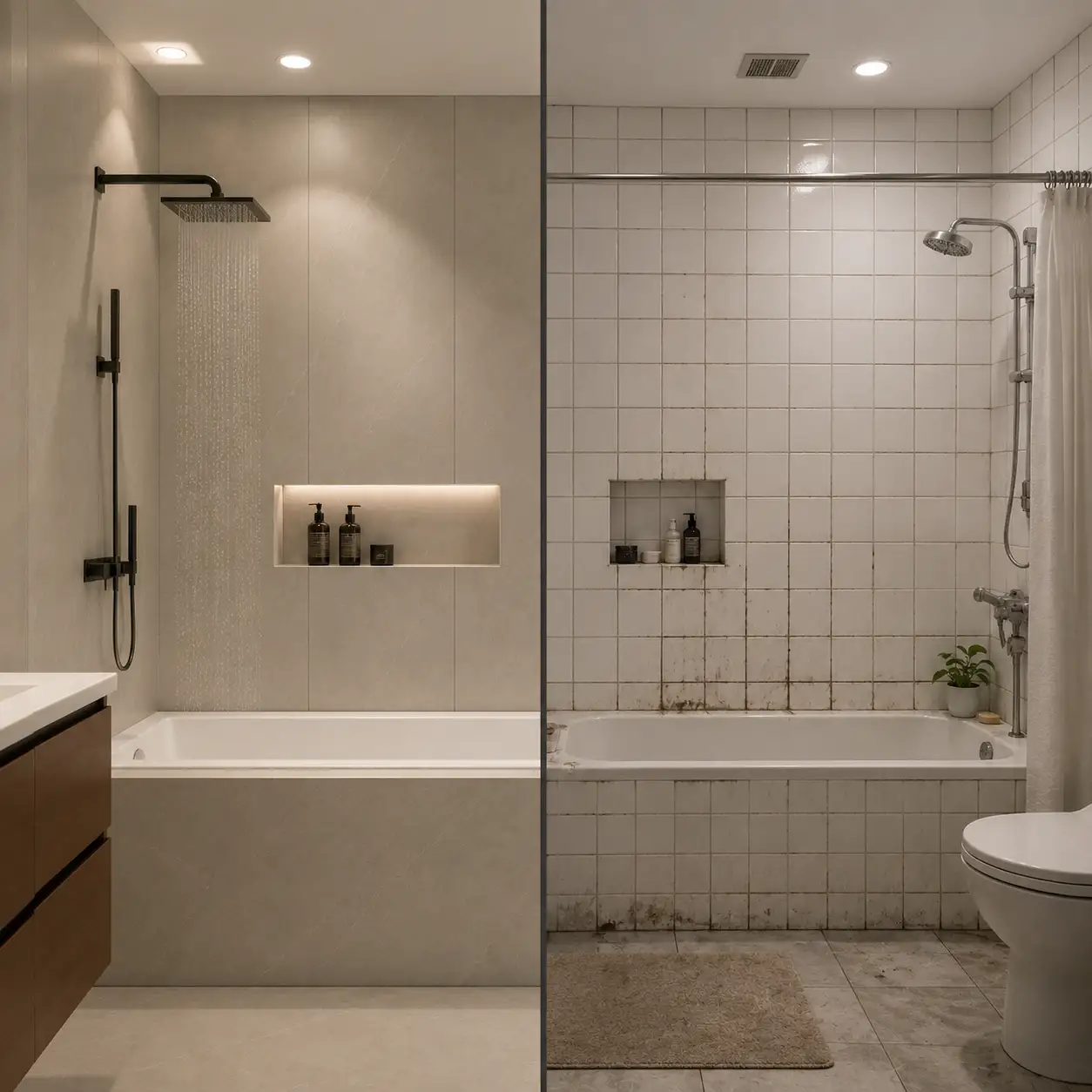
Краткий ответ: Hotel corridor wall panels should be selected around the real damage pattern of the corridor: luggage scuffs, housekeeping carts, guest-room door edges, elevator lobby traffic, cleaning frequency and corner impact. A good corridor wall system is not just a decorative panel. It should combine the right surface finish, impact-zone planning, trims, corner details and future repair logic.
If you are planning a hotel renovation, do not choose panels only from a catalog photo. Prepare corridor width, wall height, existing wall photos, damage locations and the design level of the hotel. Then compare WPC, SPC, PVC, fluted, acoustic and anti-collision wall panel options against those conditions. You can start with our hotel wall panel project ideas, then send corridor photos and dimensions for a more practical material recommendation.
Why Hotel Corridor Walls Fail Faster Than Guest Rooms
A hotel guest room wall is touched by a small number of people. A corridor wall is touched by everyone. Guests roll suitcases along it, housekeeping teams move carts through it, maintenance staff carry equipment through it, and every room entrance becomes a small impact point. That is why hotel corridor wall panels need a different decision process from bedroom feature walls or lobby decoration.
The damage is usually not dramatic at first. It starts as black scuff marks near the lower wall, chipped corners beside doors, dirty hand marks near elevator waiting areas, dented sections beside housekeeping routes, or peeling finishes where cleaning is repeated too often. One mark is easy to ignore. A full corridor of small marks makes the hotel feel tired, even when the rooms are still in good condition.
For a project manager, the real question is not only “Which wall panel looks good?” The better question is: “Which wall finish can keep the corridor looking clean after months of guest traffic, while still matching the hotel design and staying reasonable to maintain?” That is where panels, trims, surface finish and installation planning need to work together.

The Corridor Damage Checklist Project Managers Should Use First
Before choosing hotel corridor wall panels, walk the corridor slowly and mark where the damage happens. Most hotels do not need the same material strength on every wall. A quiet upper wall, a lower impact zone, a door-side section and an elevator lobby may each need a different level of protection.
| Problem Area | What Usually Happens | What to Check Before Choosing Panels |
|---|
| Lower corridor wall | Luggage wheels, bags and cleaning tools leave dark marks or scratches. | Check panel surface durability, easy-clean finish and lower wall height. |
| Guest-room door area | Edges get bumped by luggage, carts and repeated guest movement. | Check trims, edge protection and how panels stop around door frames. |
| Outside corners | Corners chip, dent or lose paint faster than flat wall sections. | Use corner trims or stronger anti-collision details, not only flat panels. |
| Elevator lobby | Guests wait, lean, touch walls and move luggage in a concentrated area. | Balance stronger material with a more refined visual finish. |
| Long straight corridor | The wall can feel plain, narrow or noisy if the finish is poorly chosen. | Consider rhythm, color, lighting and acoustic comfort together. |
This checklist is useful because it prevents overbuying and under-protecting at the same time. Some areas may need a stronger panel or anti-collision board. Other areas may only need a decorative wall panel with a cleanable surface and good trim detail.
Best Wall Panel Materials by Corridor Zone
For hotel corridors, the better material decision is often zone-based. Instead of asking one product to solve every problem, divide the corridor into functional areas. This makes the design more practical and usually easier to explain to the owner, contractor and purchasing team.
Main Corridor Wall
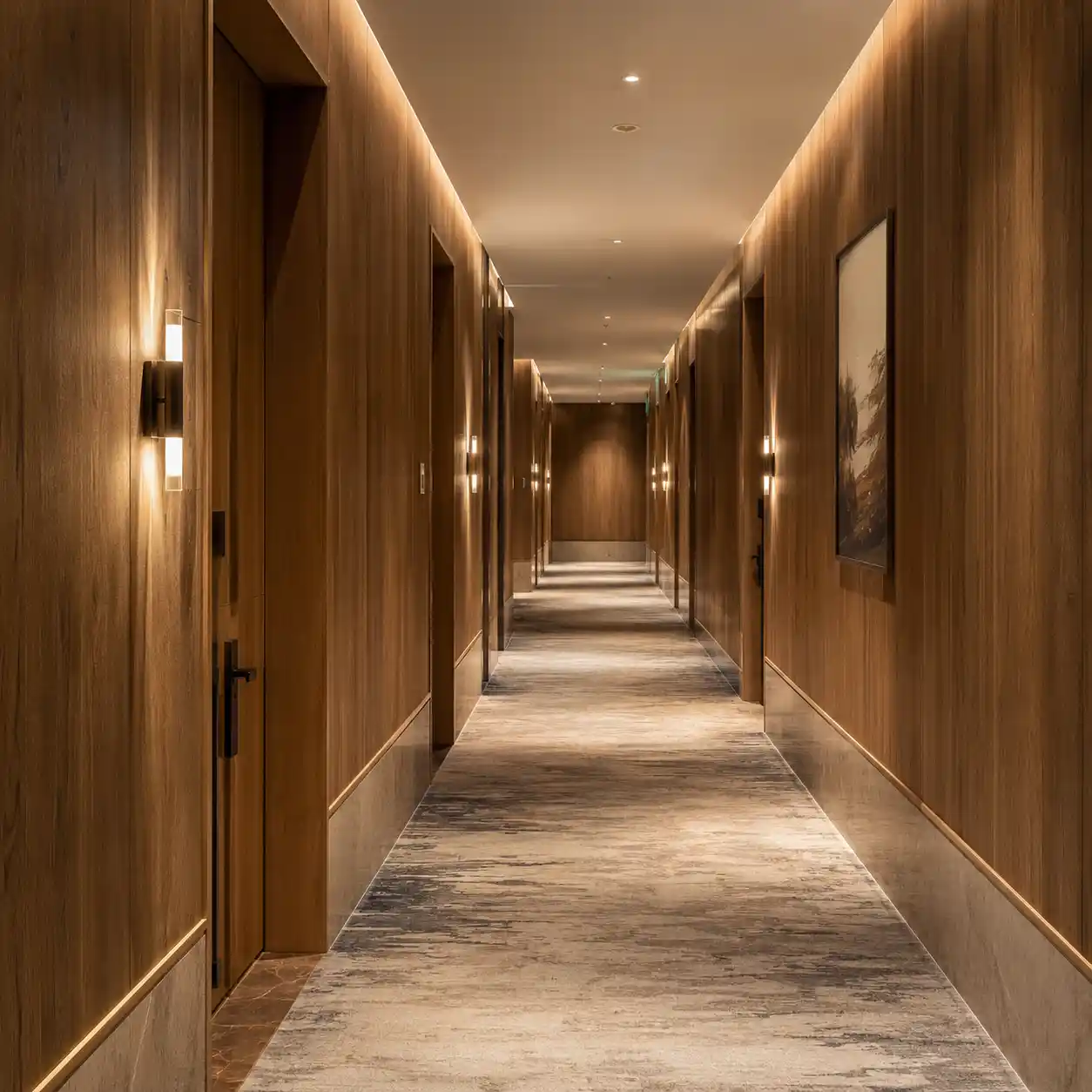
The main corridor wall needs a finish that looks calm under long lighting lines and does not show every small mark. Wood-look WPC wall panels for warm hotel corridors can work well when the hotel wants a softer, more residential atmosphere. They are especially useful when the corridor connects with guest rooms, suites or villa-style hospitality areas.
Lower Impact Zone
The lower wall is where most scratches and scuffs appear. For this section, surface finish and cleaning behavior matter more than decoration alone. SPC or PVC wall cladding may be considered when the corridor needs a smooth, easy-clean surface. For high-traffic service routes, anti-collision boards can also be planned as a stronger lower-wall layer.
Guest Room Entrance
Room entrances are small but important. This is where luggage turns, guests stand, key cards are used and door frames receive repeated contact. A good panel plan should include clean stopping points, neat trims and enough tolerance around the door frame. If the door-side detail is poor, even a good panel can look cheap after installation.
Elevator Lobby and Public Node
Elevator lobbies need a higher design level because guests pause there. Fluted panels, stone-look panels or a more refined WPC finish can create a stronger visual impression. The goal is not to make the wall loud. It is to give the corridor a controlled design rhythm so the space feels intentional instead of purely functional.
Long Narrow Corridor
Long hotel corridors can feel flat or harsh if the wall material is too plain. In some projects, acoustic comfort also matters because footstep noise, door noise and trolley movement can travel along the corridor. Acoustic wall panels may be used selectively, especially in premium hotels, quiet floors, meeting areas or corridors close to suites.
WPC, SPC, PVC, Fluted and Acoustic Panels: Which One Fits Hotel Corridors?
Different hotel corridor wall panels solve different problems. A practical specification should connect each material with a use case, not just a product name.
| Panel Type | Best Corridor Use | What to Watch |
|---|
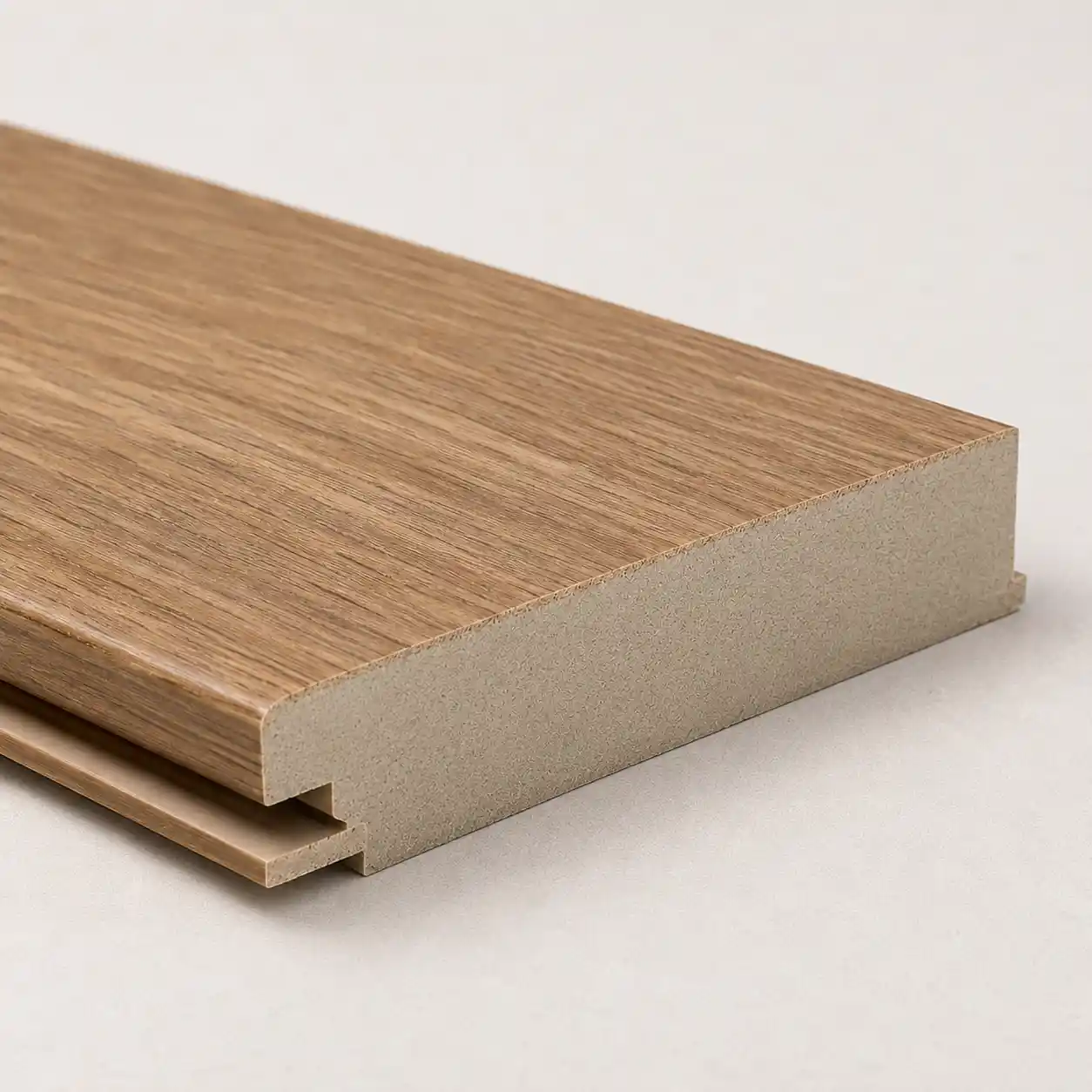
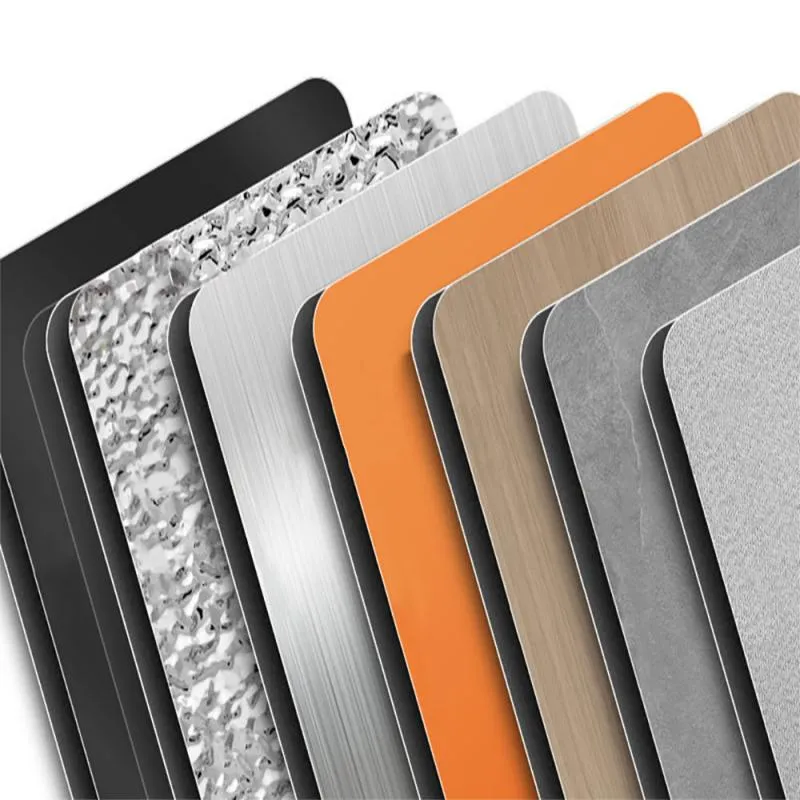
| Стеновые панели из композитного материала (WPC) | Warm wood-look corridors, guest-room floors, villa hotels and refined commercial interiors. | Check profile thickness, edge detail, surface finish and trim matching. |
| Стеновые панели SPC | Easy-clean interiors, humid-adjacent zones and corridors that need a more practical surface. | Confirm finish style, wall flatness and installation method before selection. |
| Настенные панели из ПВХ | Budget-sensitive renovation, smooth wall cladding and fast decorative updates. | Avoid very thin or glossy finishes if the hotel wants a premium look. |
| Панели со рифлёными стенками | Elevator lobbies, feature sections, room entrance accents and visual rhythm in long corridors. | Groove depth can collect dust, so match the profile to cleaning routines. |
| Acoustic wall panels | Quiet floors, suite corridors, meeting areas and hotels where hallway noise affects comfort. | Use them where sound comfort matters, not as a universal replacement for impact protection. |
| Anti-collision wall boards | Lower-wall impact zones, service corridors, hospital-style hotel areas and busy public routes. | They need to be integrated with the design, or the corridor may look too institutional. |
For many hotel corridors, the best answer is a combination. A warm WPC or decorative panel can define the main look, SPC wall panels for easy-clean interiors can be considered where cleaning pressure is high, and stronger anti-collision details can protect corners and lower sections.
Anti-Collision Details That Matter More Than the Panel Itself
Many corridor problems are blamed on the panel, but the real weak point is often the detail. A flat wall panel cannot protect a sharp outside corner by itself. A beautiful surface cannot hide a rough exposed edge. A durable material can still look poor if the door-frame transition is not planned.
For hotel corridor wall protection, pay attention to these details before confirming materials:
- Lower wall height: decide whether the protective area should cover luggage contact height or extend higher for visual balance.
- Corner trims: outside corners need stronger protection because they receive direct impact.
- Door-side finishing: each guest-room entrance should have a clean stopping detail around the frame.
- Skirting and base line: the bottom edge must handle cleaning contact and floor transition neatly.
- Expansion and joints: long corridors need controlled joint locations so the wall does not look broken.
- Lighting direction: corridor lighting can reveal uneven walls, glossy patches and poor joint alignment.
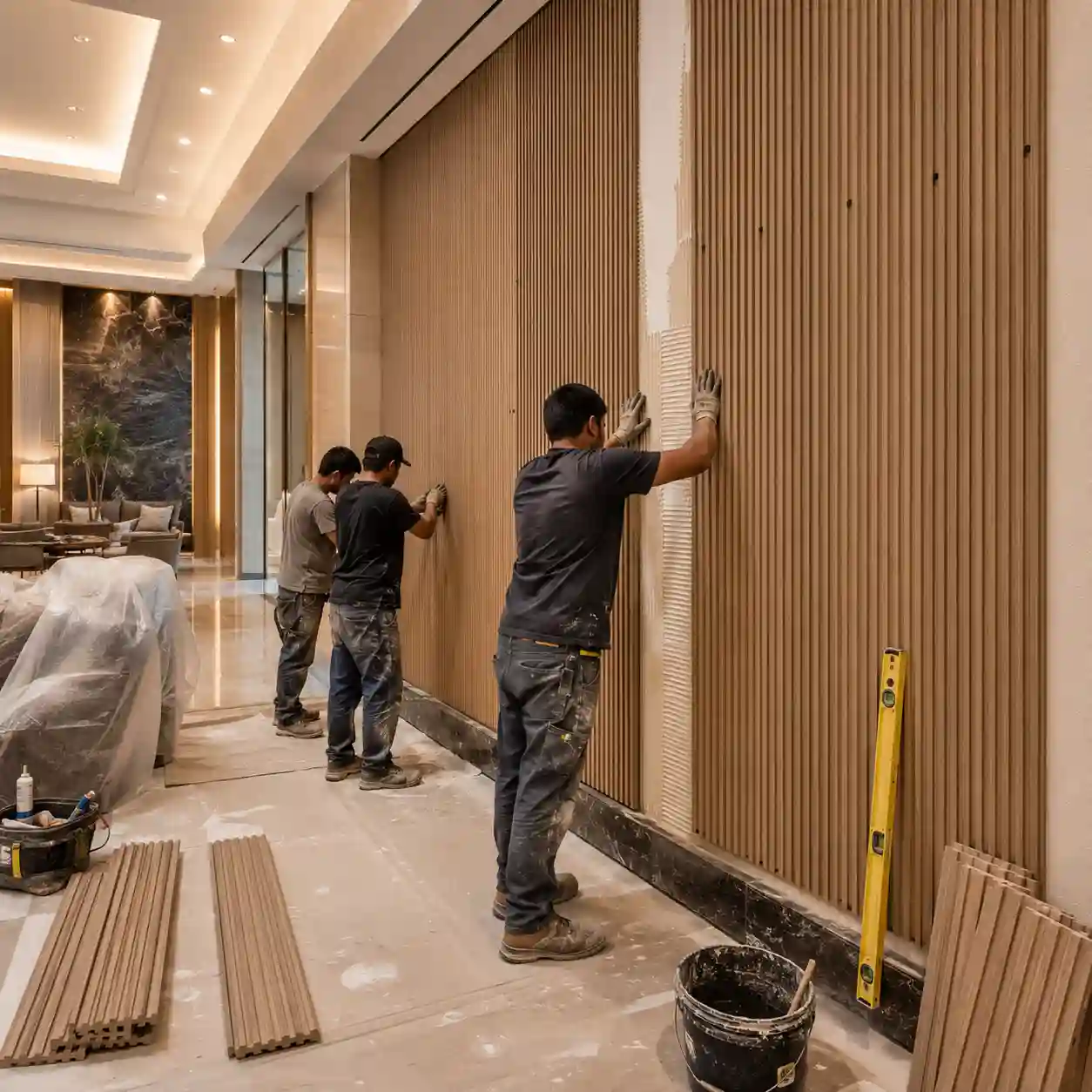
This is why trims and accessories should be discussed early. Before the final quotation, compare panel samples together with отделочные элементы и аксессуары для стеновых панелей. A project that plans trims late often spends more time fixing edges than installing the panels themselves.
How Wall Panels Can Reduce Hotel Corridor Maintenance Cost
Maintenance cost is not only the price of repainting. It includes room-floor downtime, labor scheduling, odor during repair, dust control, guest complaints and the difficulty of matching old and new finishes. A wall finish that is cheap on day one can become expensive if it needs frequent repair in public corridors.
A better hotel corridor wall panel plan should reduce maintenance in four ways. First, the surface should be easier to wipe clean than ordinary paint in scuff-prone zones. Second, the lower wall and corners should be protected where impact is predictable. Third, the design should allow local repair or replacement without making the whole corridor look mismatched. Fourth, the project should reserve enough matching material for future repair, especially when the finish has wood grain, stone texture or a custom color.
For owners and contractors, this is where photos become useful. A supplier can give a more realistic recommendation when they can see whether the main problem is scuffing, denting, dirty hand marks, peeling paint, moisture near service areas or poor previous installation. Without photos, material advice easily becomes generic.
When Not to Use Wall Panels in a Hotel Corridor
Wall panels are useful, but they should not be used to cover every problem blindly. If the wall has active moisture, loose substrate, severe unevenness or unresolved mold, the base issue should be fixed first. If the project has strict fire, smoke or public-building code requirements, the material and installation system should be checked against local project standards before order confirmation.
Panels also need the right design language. A heavy anti-collision board may be practical in a service corridor but too harsh for a boutique hotel guest floor. A deep fluted panel may look elegant in an elevator lobby but collect more dust if used across every narrow corridor wall. A glossy PVC finish may be easy to clean but may not match a luxury hotel interior. Good specification is not about choosing the strongest material everywhere. It is about choosing the right finish for each zone.
What to Prepare Before Asking for a Wall Panel Recommendation
If you want a supplier or factory team to recommend a useful hotel corridor wall panel plan, prepare the basic project information first. This saves time and prevents the conversation from staying at the level of “send catalog.”
| Information to Prepare | Why It Helps |
|---|
| Corridor width and wall height | Helps decide panel height, layout rhythm and whether the corridor will feel narrow. |
| Photos of current wall damage | Shows whether the problem is scuffs, dents, stains, peeling or corner impact. |
| Guest-room door photos | Helps plan trims, stopping points and edge details around frames. |
| Elevator lobby and corner photos | Shows where stronger protection or a more decorative finish may be needed. |
| Hotel style and budget level | Helps choose between warm wood-look panels, stone-look panels, fluted accents or practical cladding. |
| Cleaning method and traffic level | Helps avoid surfaces that look good in photos but are hard to maintain on site. |
For a hotel corridor project, the most useful first step is simple: send corridor photos, rough dimensions and the main maintenance problem. From there, Yifang can help compare panel material, finish direction, trims and sample options for your project. You can also review our anti-collision wall boards for high-traffic interiors if the corridor damage is mainly caused by carts, luggage or repeated impact.
Practical Material Direction for Different Hotel Corridor Goals
If the hotel wants a warm guest-floor atmosphere, start with WPC wood-look wall panels and keep the profile clean. If the hotel needs easier cleaning in busy public areas, compare SPC or PVC wall cladding with a smoother surface. If the corridor feels too long or plain, use fluted wall panels in controlled sections instead of covering every surface. If guest comfort and hallway noise are major concerns, consider acoustic wall panels in selected areas rather than treating them as decoration only.
The most successful corridor renovations usually do not rely on one material. They combine a main wall finish, a lower protection strategy, corner trims, door-side finishing and enough spare material for later repair. That is the difference between a wall that looks good on installation day and a corridor that still looks controlled after real hotel use.
FAQ About Hotel Corridor Wall Panels
What are the best wall panels for hotel corridors?
The best wall panels depend on the corridor zone. WPC panels can create a warm wood-look finish, SPC and PVC panels can help in easy-clean areas, fluted panels can add design rhythm, acoustic panels can improve selected quiet zones, and anti-collision boards can protect high-impact lower walls.
How do hotels protect corridor walls from luggage damage?
Hotels usually need stronger planning around the lower wall, guest-room door areas, elevator lobbies and outside corners. Panels alone are not enough. Trims, corner protection, base details and repair planning should be included.
Are wall panels better than paint for hotel hallways?
Wall panels can be better than paint in areas with repeated scuffs, cleaning and impact. Paint may still work for low-contact upper walls or budget-sensitive areas. The best choice depends on traffic level, cleaning frequency, design level and repair expectations.
Can acoustic wall panels be used in hotel corridors?
Yes, acoustic wall panels can be used in hotel corridors where sound comfort matters, such as suite floors, meeting areas or quiet hotel zones. They should be selected together with durability, cleaning and fire-code requirements for the project.
Which corridor areas need stronger wall protection?
Outside corners, elevator lobbies, guest-room entrances, service routes and lower wall sections usually need stronger protection because they receive more contact from luggage, carts, cleaning tools and daily traffic.
What photos and dimensions should I send for a wall panel recommendation?
Send corridor width, wall height, photos of the current wall, close-ups of damaged areas, door-frame photos, corner photos, elevator lobby photos and your preferred design style. This helps the supplier recommend materials and trims more accurately.
Next step: If your hotel corridor walls are easy to dirty, scratch or dent, send us corridor photos and rough dimensions. We can help compare WPC, SPC, PVC, fluted, acoustic and anti-collision panel directions before you request samples or quotation.


 English
 العربية
 हिन्दी
 Español
 Français
 Português
 Deutsch
 Русский
 ไทย
ไทย