Waterproof wall panels are designed to resist water on the panel surface, but they are not automatically leak-proof at joints, corners, edges or pipe openings.
This is especially important for bathrooms, hotel rooms, apartment renovations, wet rooms and commercial interiors where wall panels are exposed to moisture every day. A good wall panel system is not only about the panel itself. It is also about how the full wall system is installed and sealed.
Waterproof wall panels need correct joint, edge and corner sealing to prevent leaks. Waterproof vs. Leak-Proof: What Is the Difference? Many buyers use “waterproof” and “leak-proof” as if they mean the same thing. In real projects, they are different.
A waterproof wall panel means the panel surface does not easily absorb water. PVC and SPC wall panels, for example, are commonly used because their surfaces are highly moisture-resistant and easy to clean.
A leak-proof wall system means water cannot pass through the weak points of the installation. These weak points include panel joints, inside corners, outside corners, bottom edges, top edges and openings around pipes or shower fixtures.
In short: the panel may be waterproof, but the wall system only becomes leak-resistant when the joints and edges are sealed correctly.
Waterproof panels resist surface moisture, while leak resistance depends on the full installation system. Where Do Wall Panel Leaks Usually Happen? Most wall panel leaks do not happen through the middle of the panel. They usually happen around the installation details.
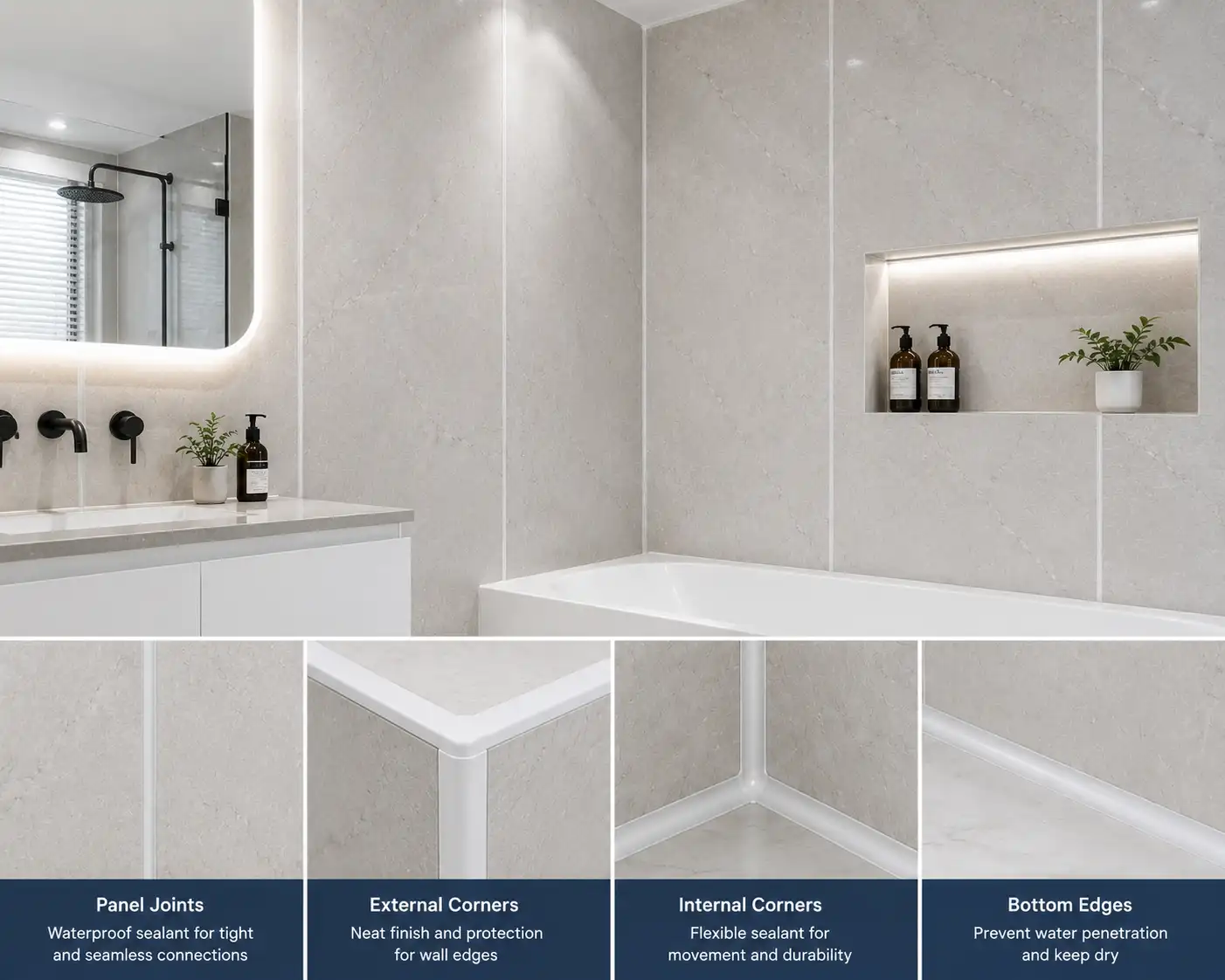
Panel Joints If two panels meet without proper locking, trimming or sealant, water can enter the gap. This is one of the most common failure points in bathrooms and shower areas.
Inside and Outside Corners Corners receive more water flow and cleaning pressure. Without corner profiles or waterproof sealant, moisture can move behind the panels.
Bottom Edges Near the Floor The bottom edge is often exposed to standing water, mopping water or shower runoff. This area should be sealed carefully, especially in bathrooms, hotels and apartment projects.
Pipe Openings and Fixtures Openings for faucets, shower heads and plumbing fixtures must be cut accurately and sealed after installation. Even a small unsealed gap can lead to long-term moisture problems.
Uneven or Damp Wall Substrates Wall panels should be installed on a clean, flat and dry surface. If the wall behind the panel is damp, uneven or unstable, adhesive bonding and panel alignment may fail over time.
Most wall panel leaks happen at joints, corners, bottom edges and pipe openings rather than through the panel surface. Which Wall Panel Materials Are Best for Wet Areas? Different wall panel materials perform differently in wet or semi-wet environments.
Material Waterproof Surface Best Use Notes PVC Wall Panels Excellent Bathrooms, kitchens, laundry rooms, wet areas Lightweight, cost-effective and easy to clean SPC Wall Panels Excellent Hotels, commercial interiors, high-traffic wet areas More rigid, stable and impact-resistant WPC Wall Panels Good, depending on formula Interior decorative walls and semi-wet areas Better for living spaces, villas and commercial decoration PU Stone Panels Good, depending on grade Feature walls, restaurants, villas, decorative areas Wet or outdoor use requires correct coating and sealing
For bathrooms and wet areas, PVC and SPC wall panels are usually the most practical options. PVC is lighter and more economical, while SPC offers stronger rigidity and better performance for commercial projects.
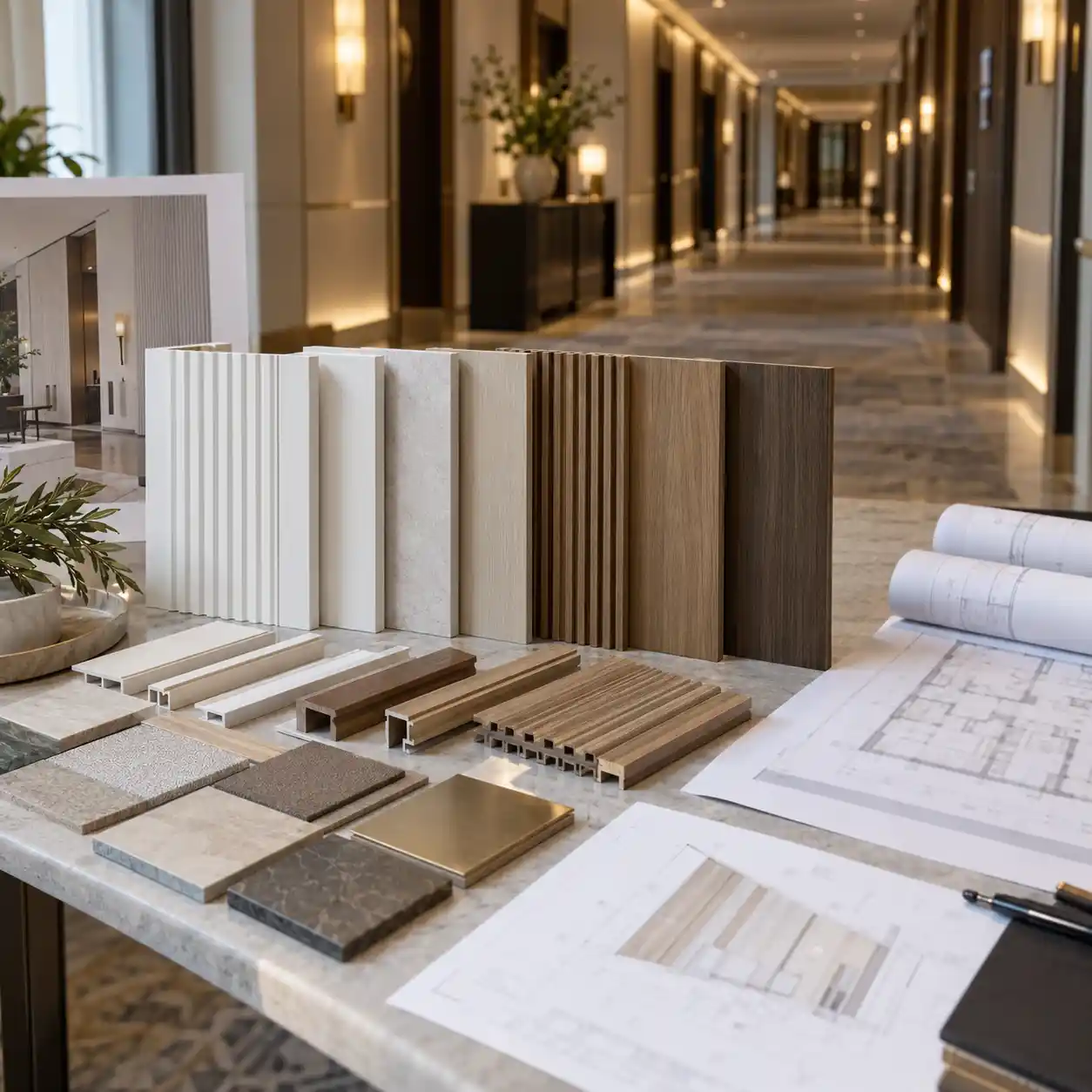
PVC , SPC, WPC and PU stone panels perform differently depending on wet-area exposure and project requirements.Choose Waterproof Panels by Water Exposure “Bathroom wall” is too broad for a material decision. The same room can include dry walls, splash zones and direct shower exposure, each with a different installation risk.
Wall zone What the panel needs to handle What to confirm before installation Dry bathroom wall Humidity, everyday wiping and visual finish. Substrate flatness, panel joints and a finish that suits the room light. Vanity or basin splash zone Repeated splashes, cleaners and exposed bottom edges. Panel material, edge trims, sealant compatibility and the joint sequence. Direct shower wall Continuous water exposure around corners, fixtures and penetrations. Existing waterproofing condition, local requirements, trims, sealant and every cut-out before fixing the panels.
For wet-area finish comparisons, review SPC wall panels for bathrooms and wet areas together with matching wall panel trims and accessories . A waterproof surface does not remove the need to assess the existing wall and the full installation system.
How to Prevent Leaks When Installing Waterproof Wall Panels A reliable waterproof wall panel project depends on both material quality and installation quality.
Use Matching Trims and Corner Profiles Matching trims help protect exposed edges, corners and panel ends. They also make the installation cleaner and more durable.
Seal All Joints with Waterproof Sealant Panel joints, corners, bottom edges and fixture openings should be sealed with suitable waterproof sealant. Ordinary glue should not replace proper sealing materials.
Leave Expansion Gaps Where Required Some wall panel materials expand or contract slightly with temperature changes. Installation should allow proper spacing where required by the manufacturer.
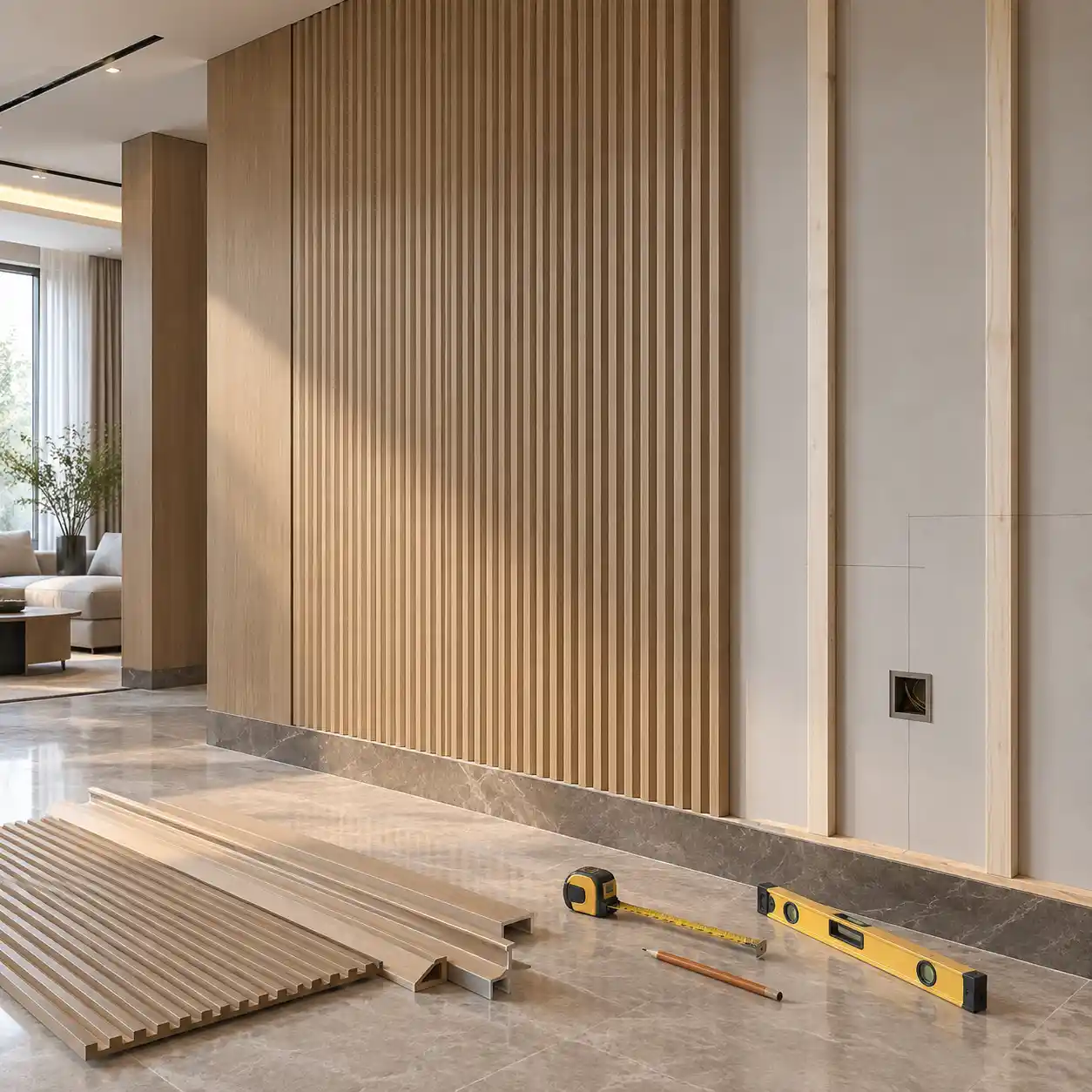
Install on a Clean, Flat and Dry Wall Surface The wall surface should be stable, clean and dry before installation. Uneven walls may cause panel gaps, weak bonding or visible surface waves.
Test Wet Areas Before Final Handover For bathrooms, showers and hotel wet areas, the installed wall system should be checked before final handover. This helps identify weak sealing points before the space is used.
Corner trims and waterproof sealant help protect vulnerable edges and improve wet-area wall panel performance. Common Mistakes That Cause Waterproof Wall Panels to Fail Many problems come from poor installation choices rather than the panel material itself.
Using low-quality adhesive or non-waterproof sealant Installing panels on damp or uneven walls Leaving bottom edges unsealed Cutting panels without sealing exposed edges Ignoring expansion gaps Buying panels without matching trims or accessories Choosing the cheapest panel without checking thickness, structure and application limits For bulk buyers, contractors and importers, these mistakes can lead to customer complaints, project delays and higher after-sales costs.
What Should Buyers Ask Before Ordering Waterproof Wall Panels? Before placing a bulk order, buyers should ask the supplier practical project questions.
Is this wall panel suitable for bathrooms or wet areas? What material is the panel made from? What thickness and structure do you recommend? Are matching trims, corner profiles and edge accessories available? What sealant should be used for joints and corners? Can the panels be installed over existing tiles? Can you provide installation drawings or videos? Can samples be tested before bulk production? Do you provide CE, SGS, fire-resistance or waterproof-related documents? A reliable supplier should be able to answer these questions clearly instead of only saying the panel is “100% waterproof.”
How Yifang Supports Waterproof Wall Panel Projects Yifang supplies PVC, SPC, WPC, PU stone and fluted wall panels for global residential, hospitality and commercial projects. For wet-area and moisture-resistant projects, we help buyers choose suitable materials based on application, budget, installation method and project requirements.
Yifang supports waterproof wall panel projects with samples, trims, installation guidance and export-ready packaging. Yifang can support waterproof wall panel projects with:
PVC and SPC wall panel options for wet areas Matching trims and edge accessories OEM colors, sizes and surface finishes Sample support before bulk orders Installation guidance for project buyers Export packing for international shipping Quality inspection before shipment For hotels, villas, apartments, restaurants and commercial interiors, the best result comes from choosing the right material and treating the wall panel as a complete system, not just a single decorative board.
System check: The panel is only one part of a wet-area wall. Compare SPC finishes, trims and bathroom planning details before choosing a system, then confirm corners, joints and penetrations on the actual wall.
FAQ About Waterproof Wall Panels Are waterproof wall panels completely leak-proof? Not automatically. The panel surface can be waterproof, but joints, corners, edges and pipe openings must be sealed correctly to prevent leaks. A leak-resistant result depends on both the panel material and the installation system.
Can PVC wall panels be used in bathrooms and shower areas? Yes. PVC wall panels are commonly used in bathrooms, kitchens and wet areas because they are lightweight, moisture-resistant and easy to clean. In shower areas, joints, corners and fixture openings still need waterproof sealing.
Which is better for wet areas, PVC or SPC wall panels? PVC is usually more economical and easier to handle. SPC is more rigid, stable and impact-resistant, making it a stronger option for hotels, apartments and commercial wet-area projects.
Do waterproof wall panel joints need silicone sealant? Yes. In wet areas, joints should be sealed with suitable waterproof sealant or protected with matching trims. Ordinary adhesive should not be treated as a replacement for waterproof joint sealing.
Can waterproof wall panels be installed over existing tiles? In many renovation projects, wall panels can be installed over existing tiles if the tile surface is clean, flat, dry and firmly attached. The installer should still use the recommended adhesive, trims and sealing method.
Why do some waterproof wall panels leak after installation? Leaks usually happen because of unsealed joints, poor corner treatment, uneven walls, wrong adhesive, missing trims or badly cut pipe openings. Most failures come from installation details rather than water passing through the center of the panel.
Do wall panels need matching trims and corner profiles? For bathrooms, hotels and commercial wet areas, matching trims and corner profiles are strongly recommended. They protect exposed edges, improve appearance and reduce the risk of water entering behind the panels.
How can buyers avoid warping or joint gaps? Buyers should check panel thickness, structure, recommended application, storage conditions and installation instructions. Proper wall preparation, expansion allowance and correct adhesive also help prevent warping or joint movement.
Are WPC wall panels suitable for wet areas? WPC wall panels can be moisture-resistant, but suitability depends on the formula, structure and installation environment. For heavy wet areas such as showers, PVC or SPC is usually a more practical choice.
Can Yifang provide trims, samples and installation guidance? Yes. Yifang can provide matching accessories, sample support and installation guidance based on the wall panel material, project application and buyer requirements.
Product Options for Wet-Area Wall Panels For bathroom projects, compare SPC waterproof bathroom wall panels and review wall panel trims and accessories to reduce leak risk around joints and corners.




 English
 العربية
 हिन्दी
 Español
 Français