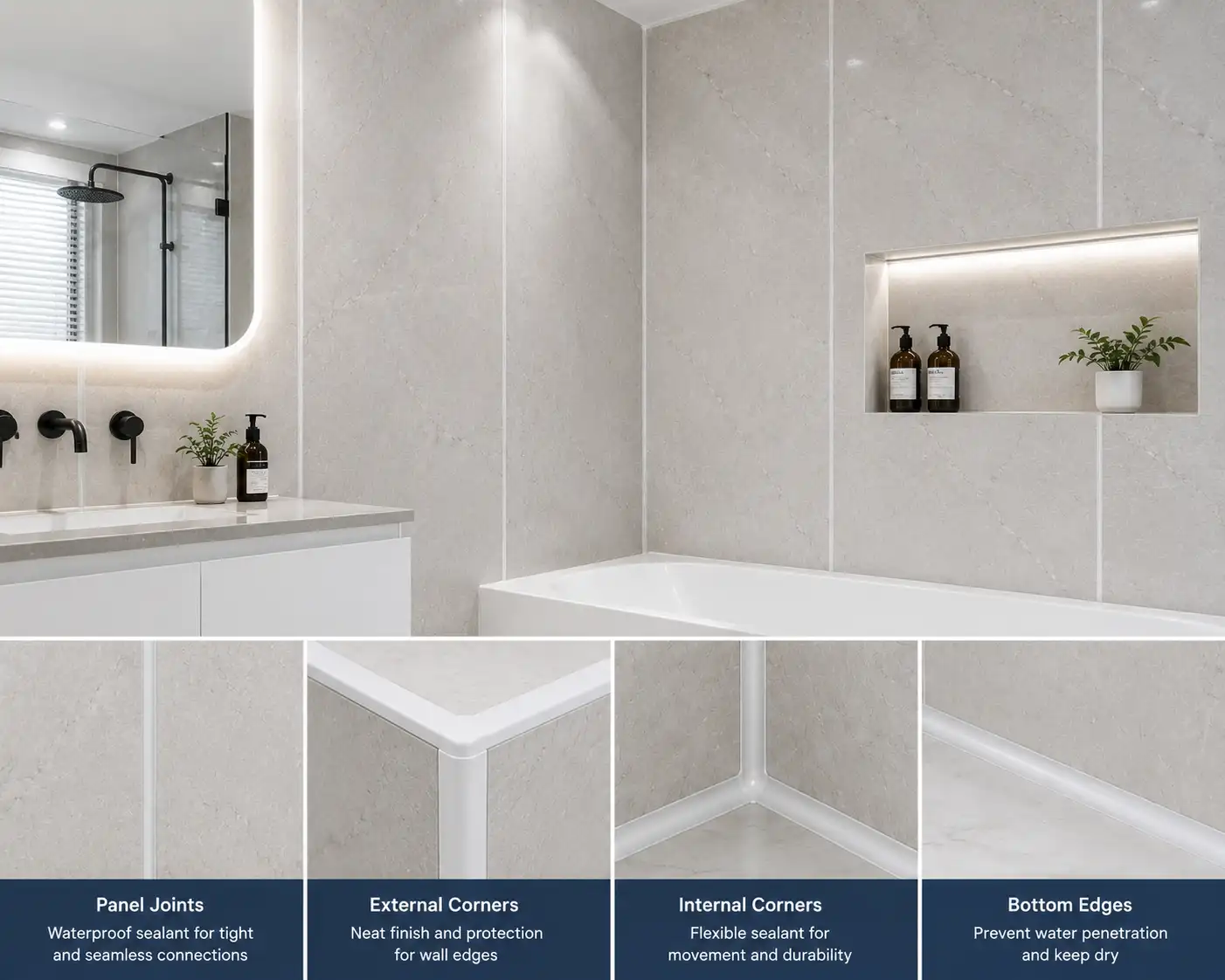
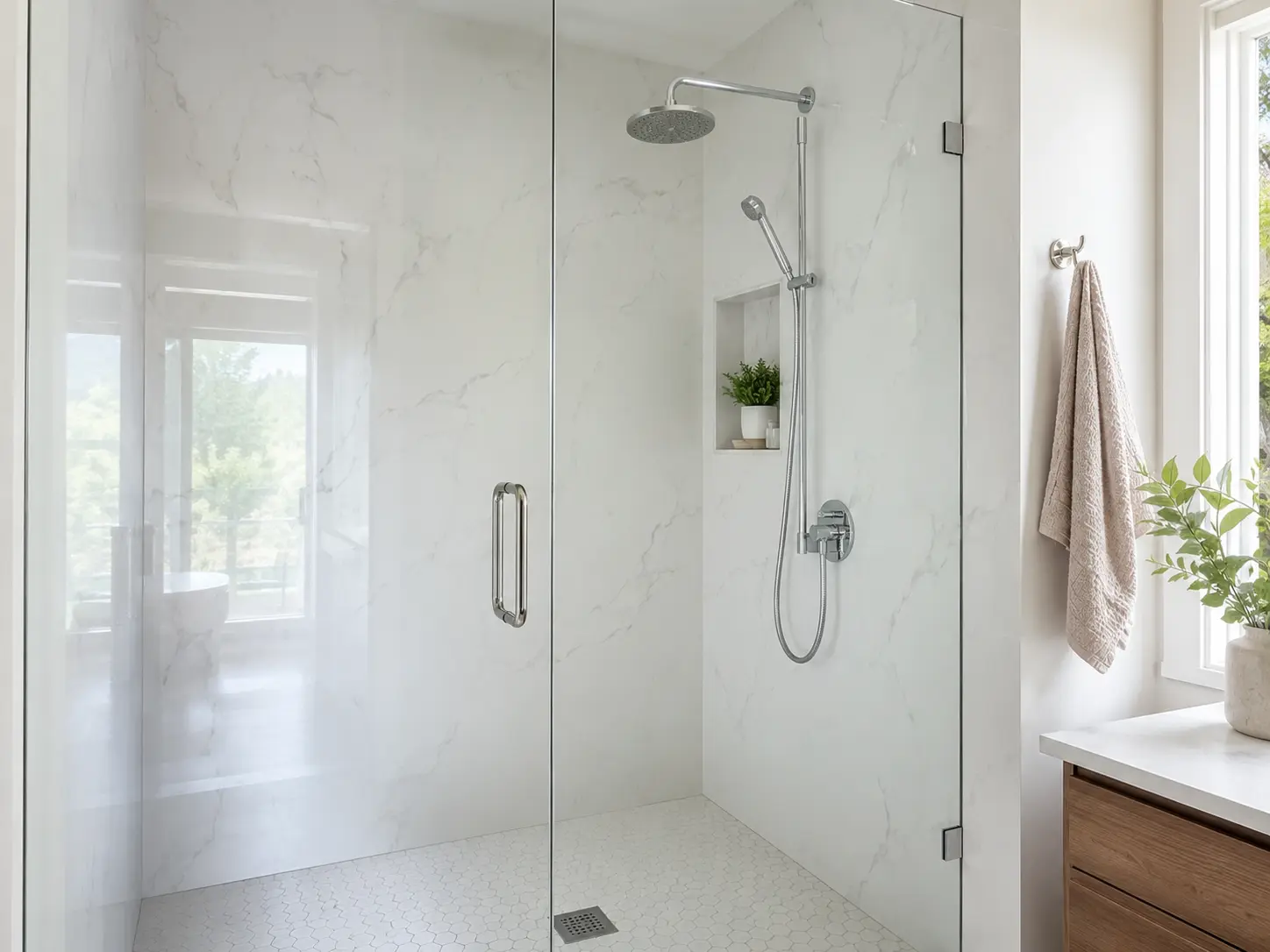
Shower wall panels are usually faster to install and easier to clean than tiles, while tiles still offer more design flexibility and a more traditional premium finish. For bathrooms, shower rooms, hotels and rental renovation projects, the better choice depends on leak control, installation quality, budget, maintenance needs and the wall panel material you choose.
Many homeowners and contractors compare shower wall panels vs tiles because both options can work in wet areas. The real question is not simply “which one is waterproof?” A better question is: which system is easier to install correctly, easier to maintain, and more suitable for the project budget?
This guide compares shower wall panels and tiles from a practical renovation point of view, including cost, leaks, cleaning, installation, appearance and material selection. If you are sourcing waterproof wall panels for a bathroom, hotel room or villa renovation, this article will help you decide when to use panels and when tiles may still be the better option.
Quick Answer: Shower Wall Panels vs Tiles
For most fast bathroom renovation projects, shower wall panels are better when the priority is quick installation, fewer joints, easier cleaning and lower maintenance. Tiles are better when the priority is a highly customized design, traditional ceramic finish or long-term stone-like appearance.
| Comparison Point | Shower Wall Panels | Tiles |
|---|
| Installation speed | Usually faster, larger panels cover more wall area | Slower, requires tile setting and grout work |
| Cleaning | Easier to wipe, fewer grout lines | Grout lines need regular cleaning |
| Leak risk | Low if joints, corners and trims are sealed correctly | Low if waterproofing and grout are done correctly |
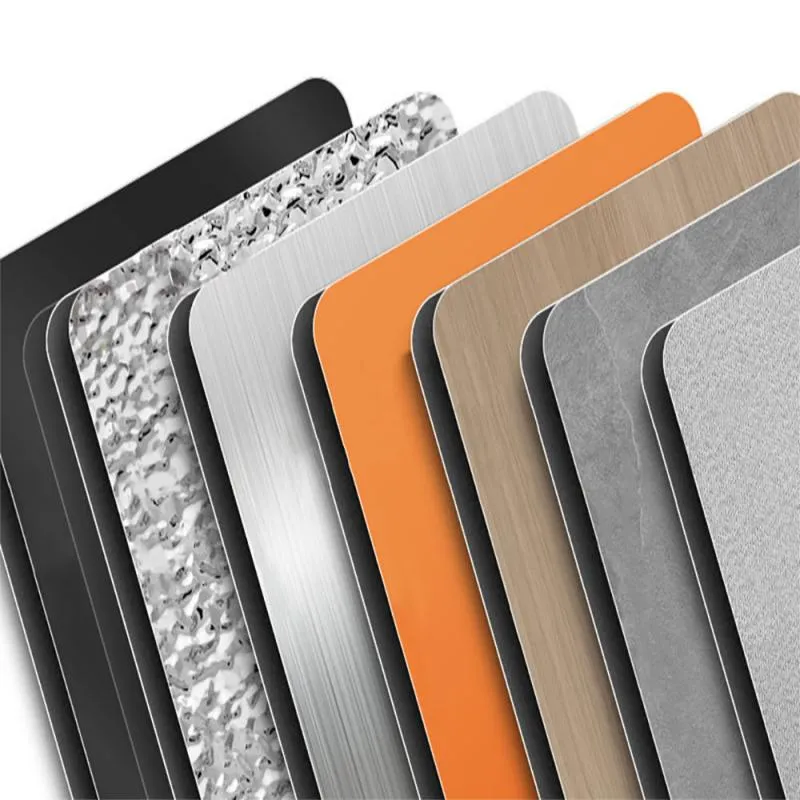
| Design options | Modern marble, stone, wood and solid-color finishes | More patterns, formats and premium ceramic looks |
| Best use | Bathrooms, showers, hotels, rentals, quick renovation | Luxury bathrooms, custom designs, traditional interiors |

What Real Bathroom Users Worry About
When people search for bathroom wall panel advice, they are rarely asking only about material names. They usually worry about real problems: leaks, cheap appearance, mold, installation mistakes, cleaning and long-term durability.
The most common concerns include:
- Will shower wall panels leak at the joints?
- Do bathroom wall panels look cheap compared with tiles?
- Are PVC wall panels strong enough for daily bathroom use?
- Can wall panels be installed over old tiles?
- Are panels easier to clean because there is no grout?
- Which material is better for wet areas: PVC, SPC, acrylic or tile?
These concerns are reasonable. A waterproof panel surface does not automatically make the whole shower wall system leak-proof. The final result depends on panel quality, wall preparation, corner treatment, trims, silicone sealing and installer workmanship.
If you want to understand this point in more detail, Yifang has a separate guide here: هل الألواح الجدارية المقاومة للماء مانعة للتسرب حقًّا؟
Leak Risk: The Panel Surface Is Not the Whole System
One of the biggest misunderstandings about shower wall panels is the word “waterproof.” A PVC or SPC panel can have a waterproof surface, but leaks usually happen at the system level, not through the middle of the panel.
The most important leak-control areas are:
- vertical panel joints
- inside corners
- outside corners
- bottom edges near the shower tray or bathtub
- pipe penetrations and mixer valve openings
- trim connections and sealant lines
For this reason, high-quality shower wall panel projects should use matching trims, corner profiles, sealing accessories and correct adhesive methods. On hotel and commercial projects, this is especially important because one leaking shower can affect neighboring rooms, ceilings or maintenance schedules.
Yifang supplies matching trims and accessories for panel systems, including inside corners, outside corners, closing lines, baseboards and connection profiles. You can view related products here: wall panel trims and accessories.
Cleaning: No Grout Is the Main Advantage
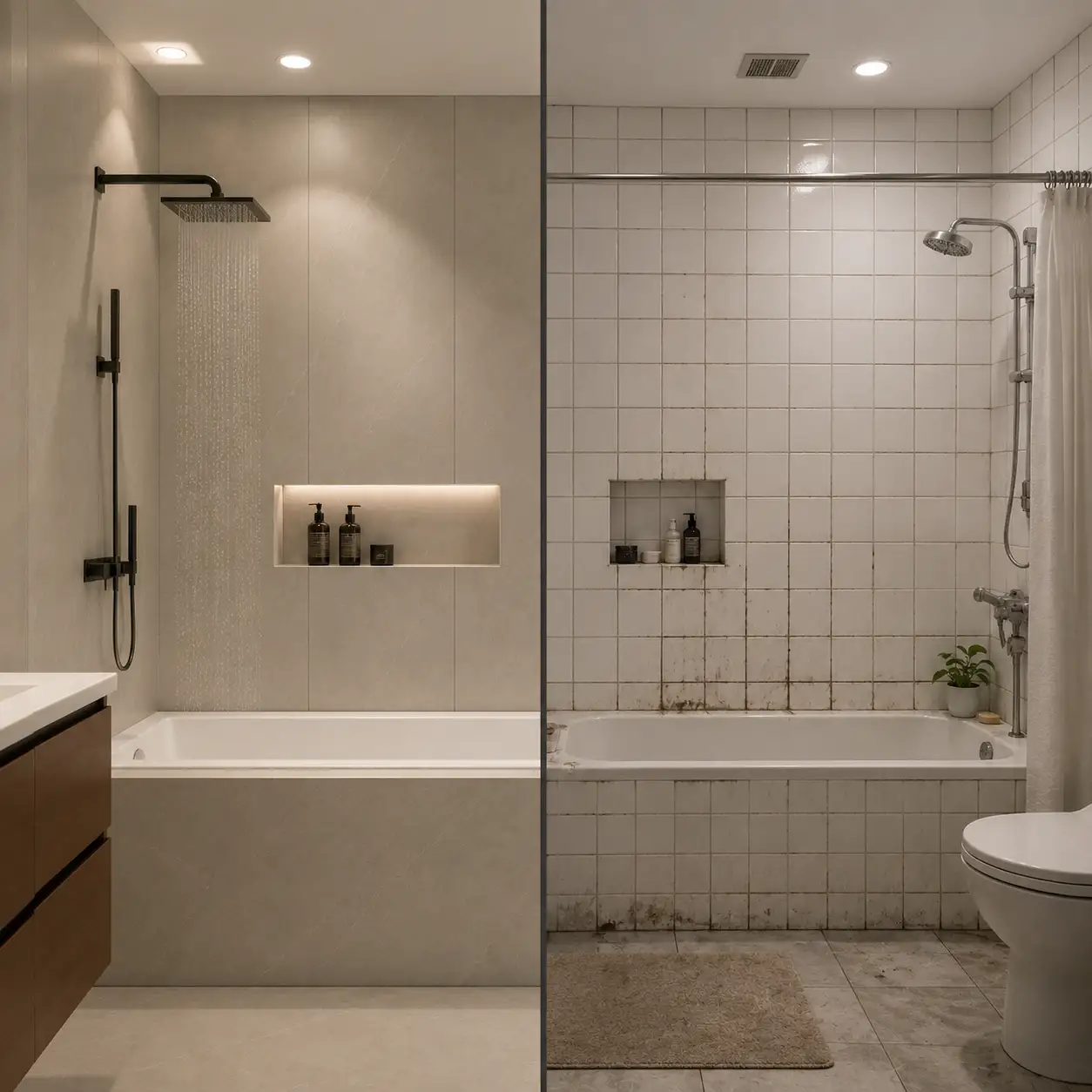
Cleaning is one of the strongest reasons people choose shower wall panels over tiles. Tiles themselves are usually easy to clean, but grout lines can collect dirt, soap residue and mildew over time. In busy homes, rental apartments and hotel bathrooms, grout maintenance becomes a real cost.
Shower wall panels reduce the number of joints on the wall surface. A large panel can cover a wide area with fewer visible seams, which makes routine cleaning faster. Most PVC and SPC wall panels can be wiped with a damp cloth and mild cleaner. Abrasive cleaners and harsh solvents should usually be avoided because they may damage the decorative surface.
This makes panels especially useful for:
- hotel guest bathrooms
- rental apartments
- student housing
- senior living bathrooms
- small home bathroom upgrades
- quick shower renovations
For projects where cleaning labor matters, fewer grout lines can be a practical advantage, not just a design preference.

Cost and Installation Time
Shower wall panels are often chosen because they can reduce installation time. Large-format panels cover more wall area than small tiles, and they do not require the same tile-by-tile setting process. In many renovation projects, panels can also reduce mess, dust and downtime.
Tiles may still be worth the cost when the project needs a high-end ceramic, porcelain or natural stone effect. However, tile work usually involves more installation steps: wall preparation, waterproofing, tile adhesive, leveling, cutting, grout, curing time and cleaning.
Wall panels can be more efficient when the goal is to refresh a bathroom quickly without a long construction schedule. This is why they are popular in hotel renovation, rental upgrades and commercial bathrooms where time affects operating cost.
For sourcing and project planning, you can review Yifang’s product categories here: wall panel products.
Appearance: Do Shower Wall Panels Look Cheap?
Some bathroom wall panels look cheap, but this is not true for all panels. The final appearance depends on surface printing quality, texture depth, color matching, panel thickness, trim design and installation details.
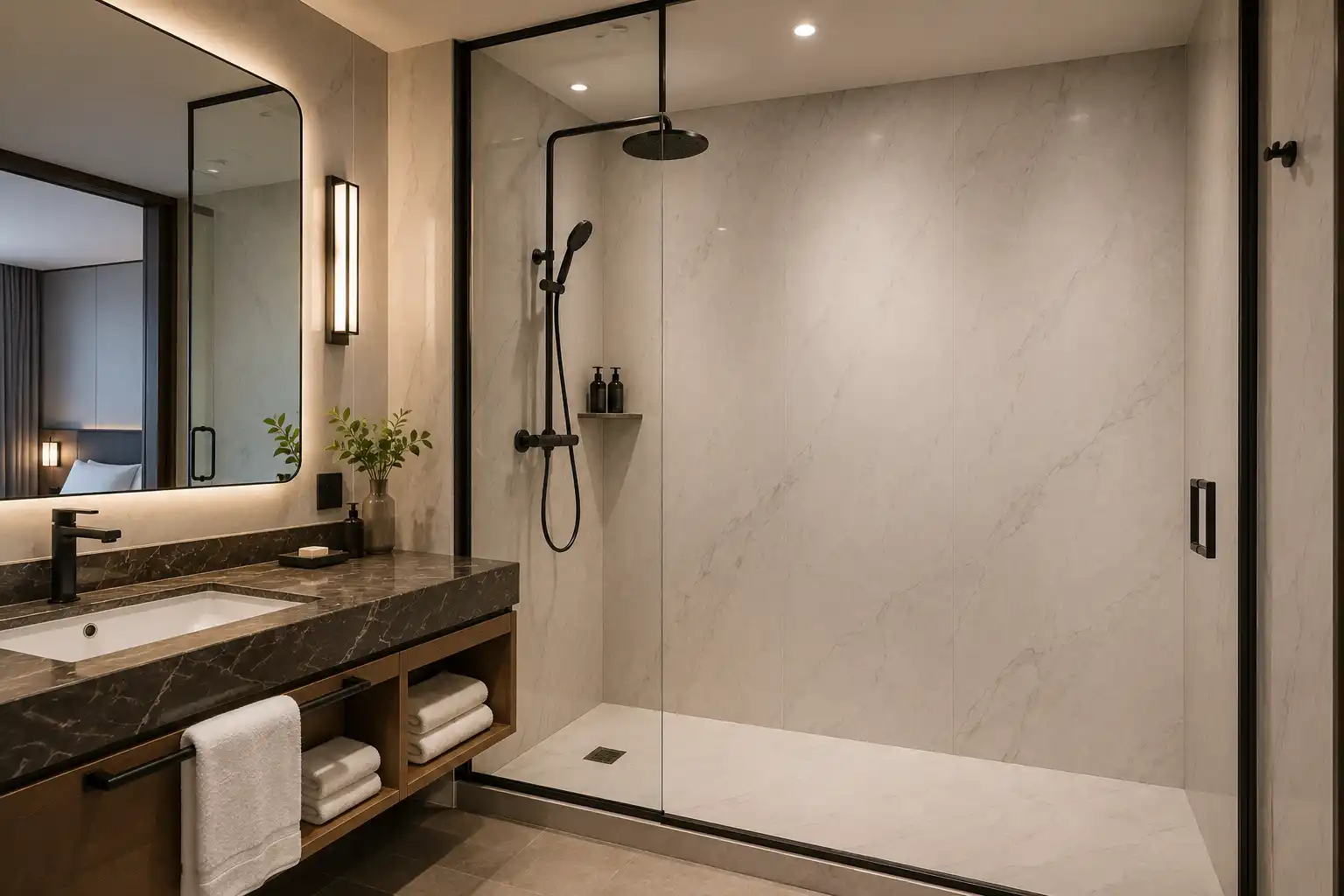
Low-quality panels may look thin, glossy or plastic-like. Better panels use more natural marble, stone, wood or matte finishes. For modern bathrooms, SPC and PVC panels can create a clean, continuous surface with fewer joints than tile. This can make a small bathroom feel larger and easier to maintain.
To avoid a cheap look, pay attention to these details:
- choose matte or natural stone-look finishes instead of overly shiny prints
- use matching trims rather than random metal strips
- keep joint lines straight and minimal
- match wall panel color with floor, vanity and lighting
- avoid very thin panels in high-use areas
If your main concern is visual quality, read this guide as well: Do Bathroom Wall Panels Look Cheap?
Best Materials for Shower Wall Panels
ألواح الجدران المصنوعة من مادة PVC
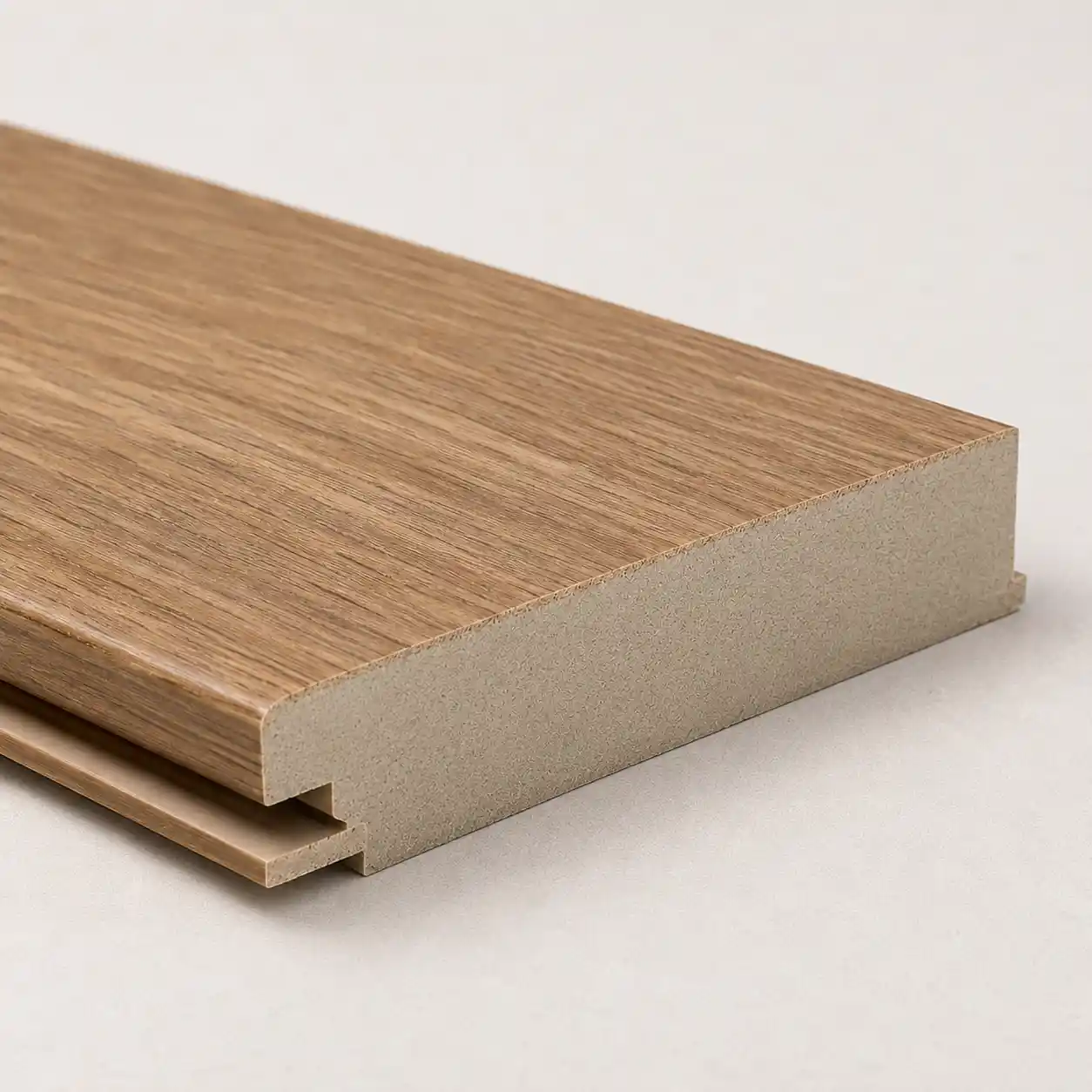
PVC wall panels are a common option for bathroom and shower wall renovation because they are lightweight, waterproof on the surface and easy to install. They are suitable for residential bathrooms, rental properties, wet walls and decorative interior projects.
PVC is often a good choice when the customer wants a cost-effective waterproof wall covering with fast installation. It is especially useful for projects where the design does not require heavy impact resistance or a premium stone-like rigid feel.
Explore Yifang’s PVC options here: PVC wall panels.
ألواح الجدران SPC
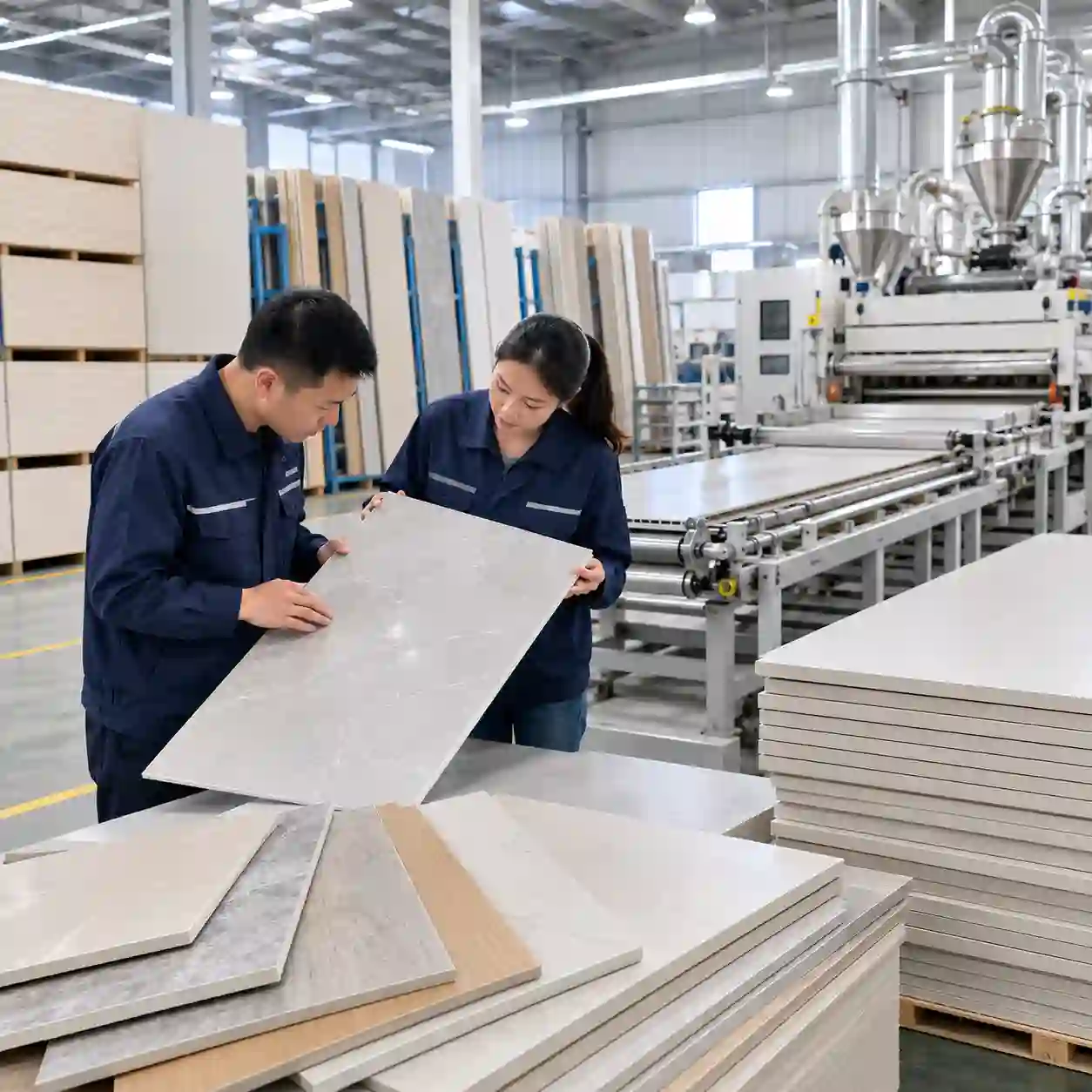
SPC wall panels are made with a rigid stone-polymer composite core. Compared with lightweight PVC panels, SPC panels often feel more solid and stable. They are suitable for bathrooms, shower areas, hotel walls and commercial renovation projects where a harder surface and stronger dimensional stability are preferred.
SPC panels can be a strong choice for customers who want marble-look or stone-look wall finishes without the weight and installation complexity of natural stone.
Explore Yifang’s SPC options here: SPC wall panels.
Acrylic and Solid Surface Panels
Acrylic and solid surface panels are also used in shower wall systems, especially in retail bathroom renovation markets. They can provide a clean and seamless look, but sourcing cost, panel size, scratch resistance and repair options should be compared carefully.
Tiles
Tiles remain a strong choice for custom bathrooms. They offer many colors, shapes and patterns, and they are familiar to installers in many markets. For luxury homes and design-led bathrooms, tiles may still deliver the most traditional premium finish.
When Tiles Are Still Better
Tiles are still better when the project requires a highly customized pattern, premium porcelain surface, mosaic detail or traditional bathroom design. They are also a good choice when the installer is highly experienced and proper waterproofing can be done behind the tile system.
Choose tiles when:
- the customer wants a luxury ceramic or stone design
- the bathroom has many complex small areas or niches
- the project needs custom patterns or decorative borders
- the budget allows skilled tile labor and longer installation time
When Shower Wall Panels Are Better
Shower wall panels are usually better when the project needs speed, easy cleaning and repeatable installation. This makes them very practical for hotels, apartments, rental properties, villas, prefabricated bathrooms and fast home renovation.
Choose shower wall panels when:
- you want fewer grout lines and easier cleaning
- the project needs faster installation
- the bathroom renovation schedule is tight
- the customer wants a marble, stone or wood look with lower maintenance
- the project needs consistent finishes across many rooms
- you need factory supply, OEM colors or bulk wall panel sourcing
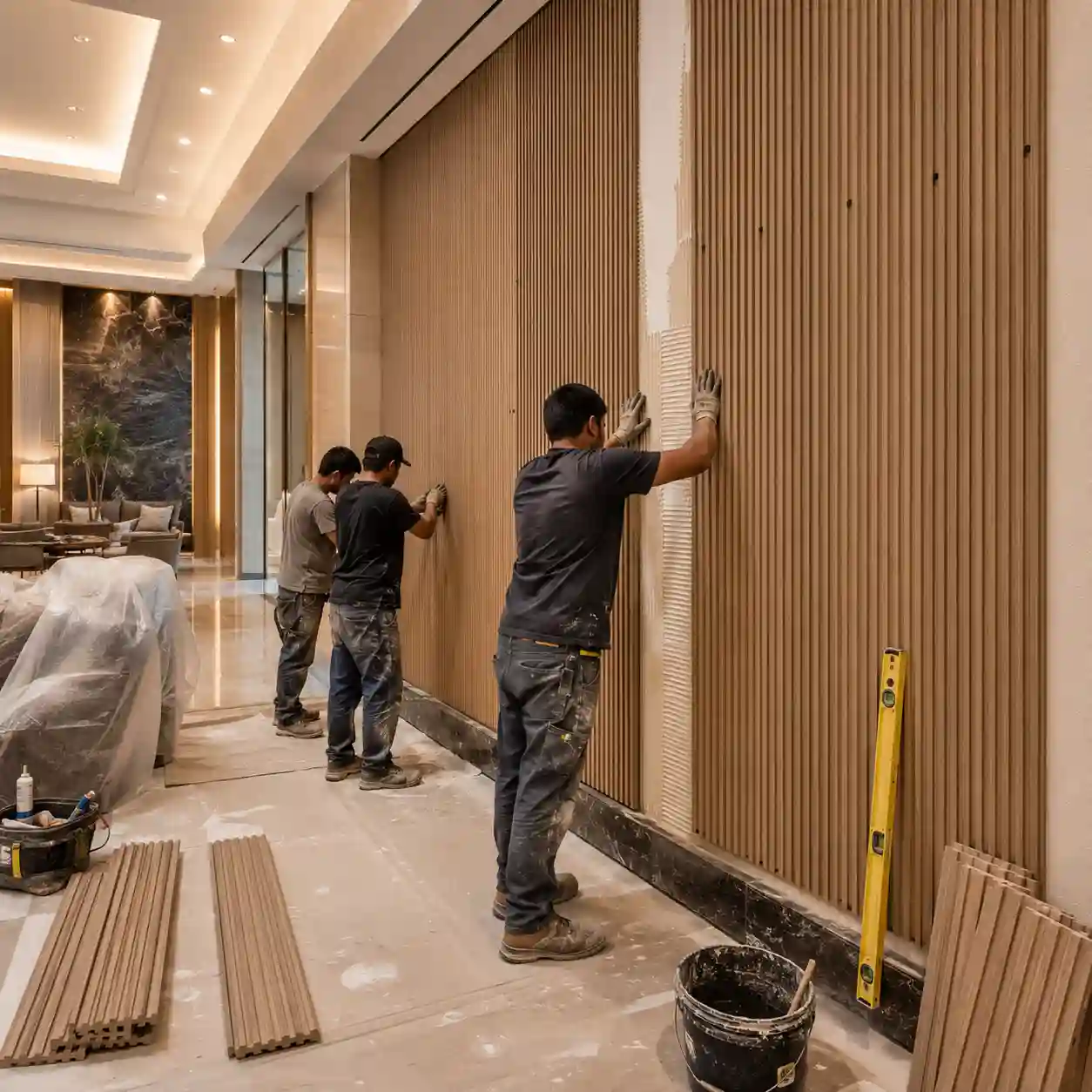
For hotel bathrooms and commercial renovation projects, Yifang can support PVC, SPC and other decorative wall panel solutions for bulk supply. View related project applications here: hotel wall panel solutions.
Buyer Checklist Before Ordering Shower Wall Panels
Before buying shower wall panels, do not only compare the surface color. A good bathroom wall panel system should match the installation method, wet-area requirements and maintenance expectations.
Use this checklist before ordering:
- Confirm whether the panel is suitable for shower or bathroom use.
- Ask what trims, corner profiles and sealing accessories are available.
- Check panel thickness, surface finish and core material.
- Ask whether the panel can be installed over existing tiles or prepared walls.
- Confirm cleaning instructions and chemical limitations.
- For commercial projects, request test reports if fire rating or emission requirements apply.
- Order samples before bulk purchase when color and texture matching matter.
If you are planning a bathroom, hotel or villa renovation project, Yifang can help recommend suitable PVC, SPC or decorative wall panels based on your application, quantity, finish preference and installation method. Contact the factory here: request a wall panel quote.
FAQ About Shower Wall Panels vs Tiles
Are shower wall panels better than tiles?
Shower wall panels are better than tiles when you want faster installation, fewer grout lines and easier cleaning. Tiles are better when you want a more traditional premium finish, custom patterns or a high-end ceramic look.
Do shower wall panels leak?
Good shower wall panels should not leak when installed correctly, but leaks can happen at joints, corners, bottom edges and pipe openings if sealing is poor. The panel surface may be waterproof, but the whole shower wall system still needs proper trims, adhesive and sealant.
Are PVC wall panels good for bathrooms?
PVC wall panels are suitable for many bathroom wall applications because they are lightweight, waterproof on the surface and easy to clean. For high-use shower areas, buyers should also check panel thickness, trim system and installation requirements.
Are SPC wall panels better than PVC for showers?
SPC wall panels are usually more rigid and solid-feeling than lightweight PVC panels. They can be a good choice for shower walls, hotel bathrooms and commercial renovation projects where a harder core and stone-look finish are preferred.
Can shower wall panels be installed over tiles?
In some renovation projects, wall panels can be installed over existing tiles if the old tile surface is flat, stable, clean and properly prepared. Loose tiles, hollow areas, mold or water damage should be repaired before installation.
Do bathroom wall panels look cheap?
Bathroom wall panels can look cheap if the surface print is low quality, the panel is too thin or the trims are poorly matched. Better PVC and SPC panels with matte stone, marble or wood finishes can create a clean and modern bathroom appearance.
Final Recommendation
There is no single winner in the shower wall panels vs tiles debate. Tiles are still excellent for custom premium bathrooms, but shower wall panels are often more practical for fast renovation, easier cleaning and repeatable project installation.
For homeowners, panels can reduce grout maintenance and shorten renovation time. For contractors, hotels and distributors, PVC and SPC shower wall panels can create a scalable wall covering solution for bathrooms, guest rooms and commercial wet areas.
If your project needs waterproof wall panels for bathrooms or showers, start by comparing the material, panel structure, trim system and installation method. A good wall panel system is not just a decorative board; it is a complete bathroom wall solution.
Explore Yifang wall panel solutions here: Yifang wall panel products.
Product Options for Shower Wall Renovation
If you are comparing shower wall panels with tiles, review ألواح جدران الدش من SPC for grout-free shower walls and wall panel trims and accessories for corner and edge planning.
Product Option for Replacing Shower Tiles
If you are replacing bathroom tiles, ألواح جدران الدش من SPC are the most relevant product option for sealed shower walls, easier cleaning and grout-free renovation. For installation planning, also review wall panel trims and accessories before ordering.

 English
 العربية
 हिन्दी
 Español
 Français
 Português
 Deutsch
 Русский
 ไทย
ไทย